
This week’s signals point to a shared strategic question: what matters more now, raw intelligence or the operating system around it? From multi-perspective AI research workflows to Musk’s manufacturing algorithm and Satya Nadella’s case for compounding human and token capital, the edge is moving from isolated tools to disciplined systems. The winners will not be the people with the most prompts or the biggest models, but the ones who encode better judgment, faster learning loops, and tighter execution.
Market Observations & Insights#
The research stack is becoming productized#

The Stanford STORM Method: How to Make Claude Research Like a PhD in Minutes
- Summary: A long-form X article translates Stanford’s STORM research workflow into a four-prompt method for generating multi-perspective briefs, contradiction maps, synthesis, and self-critique inside Claude.
- Why it Matters: The frontier is shifting from model access to research process design. Teams that operationalize structured inquiry will extract far more value from the same foundation models.
- My Take: Workflow is the multiplier on intelligence. The real moat is not the model alone, but the repeatable research protocol wrapped around it.
Remove the dumb requirement first#
- Summary: Elon Musk’s five-step operating algorithm starts by questioning requirements, deleting unnecessary parts and processes, and only then simplifying, accelerating, and automating.
- Why it Matters: This is a timeless warning for both software and organizational design: optimization is wasteful when it is applied to the wrong abstraction.
- My Take: Subtraction beats optimization. Most teams do not have a speed problem; they have a complexity problem disguised as execution work.
Distribution is still a contact sport#
- Summary: A YC-style growth playbook lays out brute-force customer acquisition tactics across launch platforms, backlink capture, warm outbound, creator seeding, and trend participation.
- Why it Matters: Founders keep overestimating product elegance and underestimating distribution volume. In crowded software markets, disciplined channel execution is often the first real moat.
- My Take: Go-to-market is a system, not a stunt. Early traction usually comes from repetitive motion across many surfaces, not from waiting for one channel to magically work.
The old hybrid advantage still matters#
- Summary: Hamel Husain revives the classic line that a data scientist sits between statisticians and software engineers, stronger than either side on the other’s terrain.
- Why it Matters: AI product work increasingly rewards hybrid operators who can move between modeling, evaluation, infrastructure, and product constraints without handoff friction.
- My Take: Interdisciplinary fluency is compounding. The people who can bridge functions will keep outperforming specialists trapped inside one layer of the stack.
Open-sourcing resilience infrastructure#
- Summary: Google is open-sourcing its upgraded hydrology modeling framework, extending predictive horizons for flood forecasting in both gauged and ungauged basins.
- Why it Matters: Climate resilience is becoming a software problem as much as a civil one. Shared forecasting infrastructure can compress the time it takes for scientific progress to become public capacity.
- My Take: Public models create strategic leverage. When critical resilience tooling becomes reusable, the beneficiaries are not just researchers but entire vulnerable geographies.
Deep Reads from the Library#
Playwright vs. Chrome DevTools MCP: Driving vs. Debugging#
Author: Steve Kinney
- Summary: Kinney draws a sharp distinction between Playwright as a browser-driving layer and Chrome DevTools MCP as a browser-debugging layer, arguing they solve adjacent but materially different agent workflows.
- Why it Matters: As agentic tooling proliferates, the strategic question is no longer whether to use browser automation, but where to place control versus observability in the stack.
- My Take: Driving and debugging are different businesses. The teams that separate execution tooling from introspection tooling will build more reliable agent systems.
How to be Good at Research#
Author: Vivek
- Summary: A practical essay on research craft that emphasizes choosing your own problems, diversifying inputs, writing constantly, tightening experimental loops, and studying raw outputs rather than just metrics.
- Why it Matters: This is the human-side complement to modern AI workflows. Better tools do not eliminate the need for taste, skepticism, and original problem selection.
- My Take: Originality is upstream of tooling. Better models can accelerate the work, but they cannot choose a worthwhile question on your behalf.
A Frontier Without an Ecosystem is not Stable#
Author: Satya Nadella
- Summary: Nadella argues that firms must build compounding learning loops between human capital and “token capital” so that organizational knowledge becomes durable AI-native IP rather than being commoditized by frontier models.
- Why it Matters: This is one of the clearest strategic frames for the AI era: value accrues to organizations that own the reinforcement loop around their expertise, not just access to the base model.
- My Take: The learning loop is the new firm. In the long run, control over institutional memory and feedback traces will matter more than temporary model arbitrage.
Highlights from the Stacks#
Grinding It Out#
It’s always shocking to be a loser.
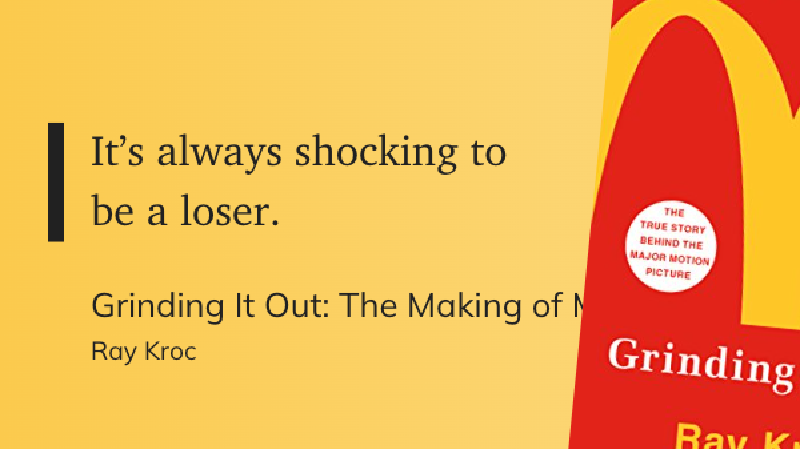
- Why it Matters: Competitive reality has a way of arriving all at once. Organizations that assume entitlement to their current position usually discover decline too late.
- My Take: Complacency compounds faster than advantage. The market does not care how inevitable your incumbency felt internally.
The Six Sigma Handbook#
Dashboard metrics should embody the principles of good metrics discussed earlier in the chapter: display performance over time, include statistical guidelines, show causes of variation when known, identify acceptable and unacceptable performance, and be linked to higher-level or lower-level dashboards to guide strategic activity.
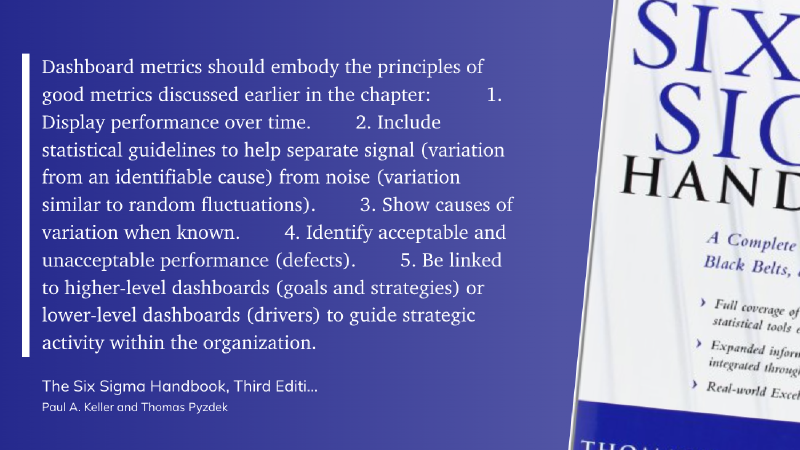
- Why it Matters: In an AI-heavy operating environment, dashboards are becoming governance tools rather than just reporting surfaces. Bad metrics create false confidence at machine speed.
- My Take: Measurement is management infrastructure. If the dashboard cannot distinguish signal from noise, it is just decorative software.
Originals#
The greatest tragedy of mankind comes from the inability of people to have thoughtful disagreement to find out what’s true.
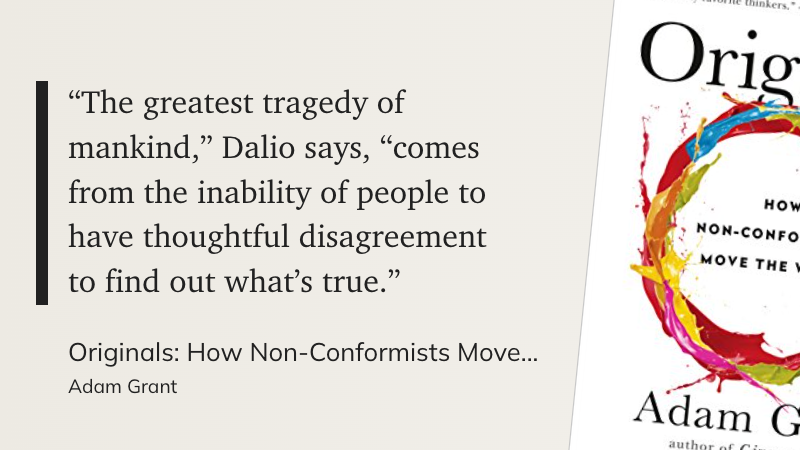
- Why it Matters: As organizations adopt AI copilots and automated decision support, the ability to preserve high-quality dissent becomes more important, not less.
- My Take: Truth needs structured disagreement. Consensus without friction is usually just hierarchy wearing the mask of alignment.