
This week’s signals converged on a singular theme: the structural shift from scaling compute to scaling coordination. Whether it’s Satya Nadella arguing for ecosystems over models, or the emergence of Open Knowledge Formats for agents, the industry is realizing that the “brain” (AI) is only as useful as the “nervous system” (coordination protocols) it inhabits. We are moving from the era of ownership to the era of clearinghouses, where the strategic high ground is no longer the data itself, but the permissions that govern how that data is acted upon.
Market Observations & Insights#
A frontier without an ecosystem is not stable#

A frontier without an ecosystem is not stable
- Summary: Microsoft CEO Satya Nadella argues that the AI transition requires companies to build deep ecosystems around their unique expertise rather than just adopting foundational models.
- Why it Matters: Value in the AI era is shifting from the model to the proprietary data and specialized workflows that surround it.
- My Take: Ecosystems are the new moats. Parity in model capability means the winner is whoever integrates best with the existing “human stack.”
Open-Sourcing Resilience#
This one caught my eye given the recent flood control projects scandal here in the Philippines. I would be interested to hear if this project is applicable and/or whether some of our leading data scientists here are looking at using AI for flood control work.
- Summary: Google is open-sourcing its hydrology modeling framework to empower global replication of flood resilience work.
- Why it Matters: High-fidelity simulation models for climate risk are becoming “public good” infrastructure.
- My Take: Simulation is the strategy for resilience. By open-sourcing the model, Google sets the global standard for climate risk assessment.
Markdown for Machines#
This one got my attention because it essentially replicates the structure of my own experiement using agents for running a CRM.
- Summary: Google’s introduction of the Open Knowledge Format (OKF) provides a standardized markdown-based directory structure for AI agents to store and retrieve knowledge.
- Why it Matters: Standardizing how “digital brains” are structured accelerates the interoperability of autonomous agents.
- My Take: Markdown is the UI for Agents. The shift from proprietary databases to transparent, agent-readable directories is the foundation of the Context Hub.
Beyond the Scaling Laws#
- Summary: DeepMind’s Demis Hassabis reportedly used a 1905 physics problem to challenge current popular narratives about the timeline of AGI.
- Why it Matters: DeepMind continues to anchor AI development in fundamental scientific breakthroughs rather than just compute scaling.
- My Take: Physics > Scaling Laws. We are entering a phase where brute force isn’t enough; we need new algorithmic breakthroughs.
The Coordination Tax#
- Summary: A critique of the narrative that high corporate salaries are purely for “labor,” suggesting they are instead payments for navigating organizational complexity.
- Why it Matters: Understanding “overhead” as a tax on coordination informs how AI might actually shrink firms.
- My Take: Coordination is the cost of complexity. AI’s true promise isn’t replacing labor, but automating the “corporate overhead” of alignment.
Deep Reads from the Library#
Systems of Record vs. Clearinghouses#
Author: Jamin Ball
- Summary: Ball posits that while the SaaS era was defined by “Systems of Record” (owning data), the Agent era will be won by “Clearinghouses” (owning the control layer).
- Why it Matters: The strategic high ground moves from the database to the permission and action layer.
- My Take: Permissions are the new API. Controlling the “handshake” between agents is the ultimate lock-in.
The Dynamo and the Computer#
Author: Paul A. David
- Summary: A historical analysis of why productivity gains from electricity (dynamos) took decades to appear, drawing parallels to the modern computer (and AI) paradox.
- Why it Matters: We shouldn’t expect immediate ROI from AI; structural changes in “factory” (office) design take time.
- My Take: The Productivity Paradox is a lag in design. We are still using AI to do “old work” faster instead of redesigning the work itself.
Highlights from the Stacks#
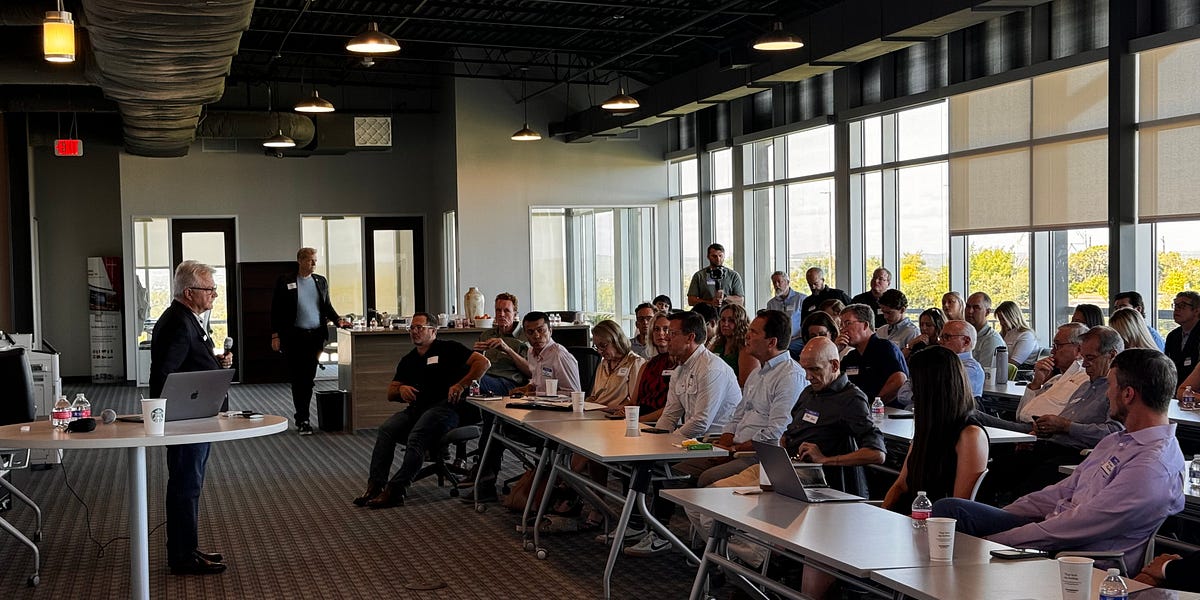
- Why it Matters: Scaling knowledge starts with a single high-bandwidth node.
- My Take: Expertise is non-fungible. You don’t scale by average; you scale by distributing the “lead” expertise.

- Why it Matters: Programmatic money enables a level of agency that legacy banking systems cannot match for humans.
- My Take: Agency is a function of the rail. We are building systems where machines have more transactional freedom than their creators.

- Why it Matters: In an era of infinite AI-generated “slop,” taste becomes the ultimate filter.
- My Take: Taste is the last human moat. When everything can be produced at zero marginal cost, the value shifts to the curation.