
This week’s signals reveal a profound shift in the architecture of intelligence and commerce. From Yann LeCun’s vision of AI world models to the consolidation of tech giants around agentic commerce protocols, we are witnessing the infrastructure of the next decade being “coded” into existence. Whether it’s Richard Hamming’s timeless advice on choosing the right problems or Taiichi Ohno’s lean manufacturing principles, the common thread is clear: excellence is found in the optimization of the system, not just its parts.
On Social#
Excellence is a Choice#
- Summary: A reflection on Richard Hamming’s legendary 1986 lecture about why some people win Nobel Prizes while others, equally smart, spend their lives on forgettable work.
- Why it Matters: High IQ is a commodity; the ability to identify and relentlessly pursue the “right” problems is the true differentiator for leaders and builders.
- My Take: The problem you choose to solve defines your legacy.
The Consolidation of Agentic Commerce#
- Summary: Amazon, Microsoft, Meta, Salesforce, and Stripe have all joined Google’s Universal Commerce Protocol (UCP), effectively ending the “protocol war” for AI agents.
- Why it Matters: We are moving toward a world where AI agents can transact across platforms seamlessly. Standardized protocols win because they reduce friction for the entire ecosystem.
- My Take: Interoperability is the ultimate moat in an agent-first world.
Designing for Agents#

Designing for Agents
- Summary: A deep dive into the evolution of UI/UX, arguing that we must now design for “Agent-Optimal Architectures” rather than just human-centered ones.
- Why it Matters: As agents become the primary way users interact with the web, the “interface” becomes a data structure rather than a visual layout.
- My Take: APIs are the new UIs.
Engineering Velocity as Strategy#
- Summary: Analysis of SpaceX’s rumored strategic interest in Cursor, reflecting the massive valuation and importance of AI-native coding environments.
- Why it Matters: For high-stakes engineering organizations, the toolset used to build the software is just as critical as the software itself.
- My Take: Engineering velocity is the only sustainable competitive advantage.
The Limits of Autoregression#
- Summary: Yann LeCun continues to argue that generative AI (LLMs) might be a dead end for true AGI, advocating for world models instead.
- Why it Matters: Understanding the fundamental ceiling of current technologies prevents us from over-investing in architectures that can’t reach the next milestone.
- My Take: Autoregressive models are just the tip of the iceberg.
Deeper Dives: Longer Listens and Videos#
2026 Lemley Lecture Featuring AI Pioneer Yann LeCun#
- Summary: LeCun explores the path to creating machines that can learn like humans and animals—through observation and interaction with the physical world, not just text.
- Why it Matters: True intelligence requires a “world model” that can predict the outcomes of actions. This is the prerequisite for autonomous agents that can safely navigate reality.
- My Take: AI needs a body (or at least a model of one) to truly think.
General Electric: Lessons from the Rise and Fall#
- Summary: A post-mortem on GE’s transition from a massive, diversified conglomerate to a lean, specialized group of independent businesses.
- Why it Matters: The conglomerate model failed when it prioritized financial engineering over operational excellence and focus.
- My Take: Complexity is a tax on agility.
Taiichi Ohno Discusses the Toyota Production System#
- Summary: Foundational insights from the father of the Toyota Production System on JIT (Just-In-Time) and the elimination of waste.
- Why it Matters: Lean principles are universal. Whether you are building cars or coding platforms, the goal is to reduce the time from “concept” to “cash.”
- My Take: Inventory is waste, whether it’s physical parts or unreleased code.
Wisdom from the Library#
The Code of Capital#
Contracts and property rights support free markets, but capitalism requires more—the legal privileging of some assets, which gives their holders a comparative advantage in accumulating wealth over others." author=“Katharina Pistor” title=“The Code of Capital
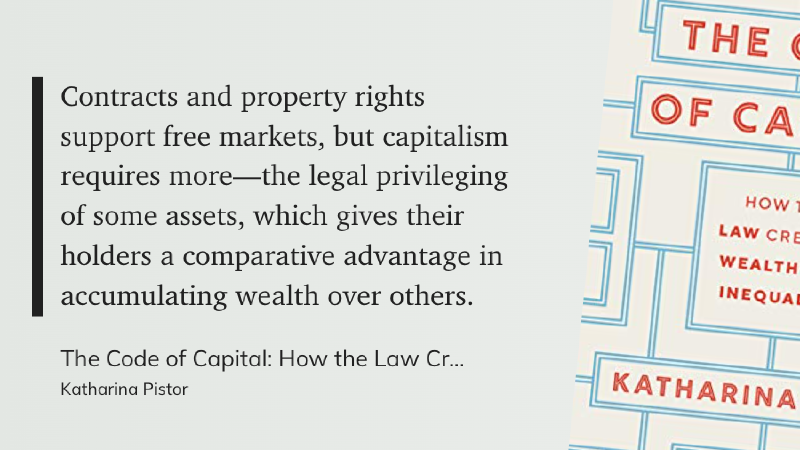
- Summary: Pistor explains how law functions as the “code” that transforms ordinary assets into wealth-generating capital through legal privileging.
- Why it Matters: For venture builders and investors, understanding the legal structure of an asset is just as important as understanding its market fit.
- My Take: Law is a technology for wealth persistence.
The Inevitable#
These incredible eruptions are the result of large-scale collaboration, and massive real-time social interacting, which in turn are enabled by omnipresent instant connection between billions of people at a planetary scale.
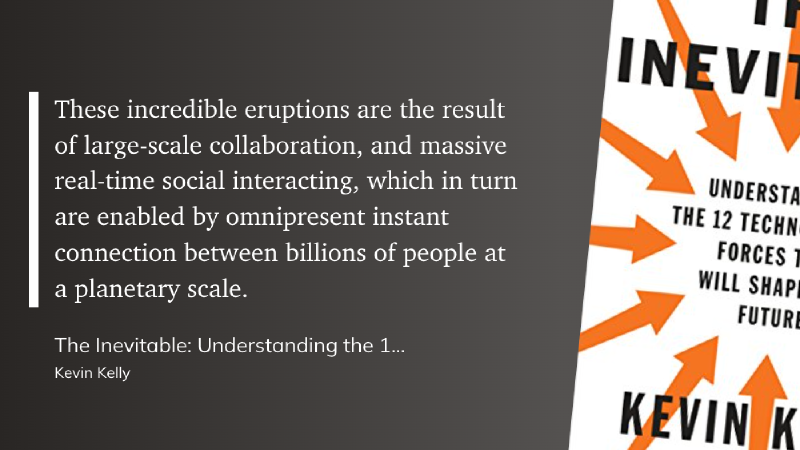
- Summary: Kelly explores how technological forces are driving us toward massive, decentralized collaboration on a global scale.
- Why it Matters: The most successful platforms of the future will be those that coordinate human (and agentic) effort more effectively than any top-down hierarchy.
- My Take: Network effects are the new gravity.
High Output Management#
as you plan you must answer the question: What do I have to do today to solve—or better, avoid—tomorrow’s problem?
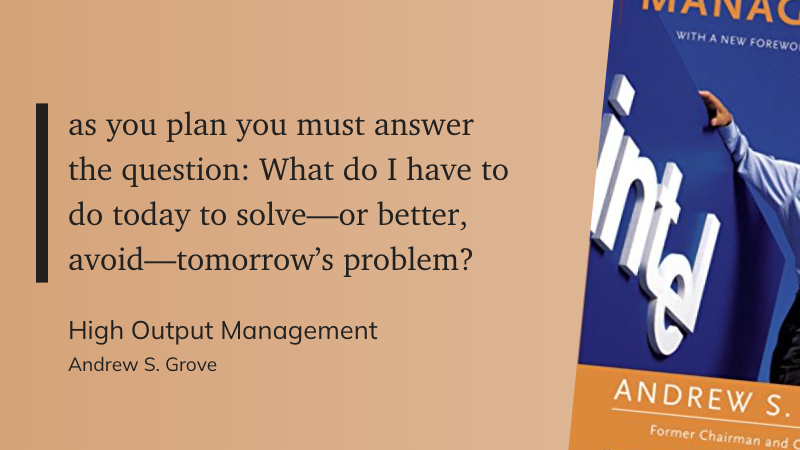
- Summary: Grove emphasizes the importance of proactive management and the “leverage” of identifying bottlenecks early.
- Why it Matters: Leadership is about leverage. A small action today that avoids a massive problem tomorrow is the highest return on time possible.
- My Take: Anticipation is the highest form of leadership.