
This week’s signals converge on the theme of reckoning vs. simulation. In the financial markets, the SaaS industry is facing a long-overdue accounting for stock-based compensation, forcing a return to “lead bullets” and real economics. Simultaneously, the technical frontier is shifting from simple automation to the simulation of human cognition and market behavior: whether through LLMs as “lossy brain uploads” or algorithmic bots navigating the truth-discovery engines of prediction markets. The common thread: the “mythos” of the past decade is being replaced by the “calculus” of the next.
The SaaS Reckoning#

The SaaS Reckoning: Stock-Based Compensation Was Never Free
Summary: Bill Gurley and Secret CFO highlight the long-overdue realization that stock-based compensation (SBC) is a real, dilutive cost that SaaS companies can no longer ignore.
Why it Matters: In an era of slowing growth and AI-driven disruption, the “Rule of 40” and ARR multiples are being stress-tested by the reality of shareholder dilution.
My Take: Capital allocation is the ultimate test of leadership. Ignoring SBC was a luxury of the ZIRP era; today, it’s a liability for any firm that hasn’t figured out how to generate real free cash flow.
LLMs as Brain Uploads#
Yes it's the tractable form of brain upload. There's a ton of scifi on brain uploads that requires way too exotic tech (scanning and simulating brains etc), when we're about to get a lossy and approximate version of that *a lot* sooner via LLM simulators. You can easily imagine a…
— Andrej Karpathy (@karpathy) April 10, 2026
Summary: Andrej Karpathy suggests that LLMs are providing a tractable, “lossy” version of brain uploading much sooner than exotic neuro-scanning tech ever will.
Why it Matters: We are moving from AI as a tool to AI as a simulation of human expertise and personality.
My Take: The simulator is the new expert. Capturing institutional knowledge via LLMs isn’t just documentation; it’s digital immortality for high-leverage workflows.
Chaos and Risk#
In 2013, Nassim Taleb gave a 53-min Stanford masterclass on why chaos makes some businesses stronger.
— andrew engler (@aerockrose) April 7, 2026
His ideas:
- The coffee cup that survives 4 million hits
- Why helicopter engineers ride their own machines
- The country where nobody knows the president
12 lessons on risk: pic.twitter.com/l5ATL2Anhm
Summary: A revisit of Nassim Taleb’s Stanford masterclass on why chaos and “anti-fragility” can actually make certain business models stronger.
Why it Matters: Traditional risk management focuses on avoidance; strategic leadership focuses on thriving under volatility.
My Take: Volatility is an input, not just an obstacle. Building systems like the “coffee cup that survives 4 million hits” is the only path to generational resilience in a fracturing global economy.
Truth as a Tradeable Asset#

Building a Prediction Market Trading Bot with Python
Summary: A technical guide to building algorithmic trading bots for prediction markets, effectively democratizing quant-level market participation.
Why it Matters: Prediction markets are the most efficient truth-discovery mechanisms we have, and they are now programmable.
My Take: The future is automated foresight. As prediction markets scale, the ability to programmatically interact with them will become a core competency for anyone managing large-scale strategic risk.
From the Library#
The Hard Thing About Hard Things#
Startup CEOs should not play the odds. When you are building a company, you must believe there is an answer and you cannot pay attention to your odds of finding it. You just have to find it. It matters not whether your chances are nine in ten or one in a thousand; your task is the same.
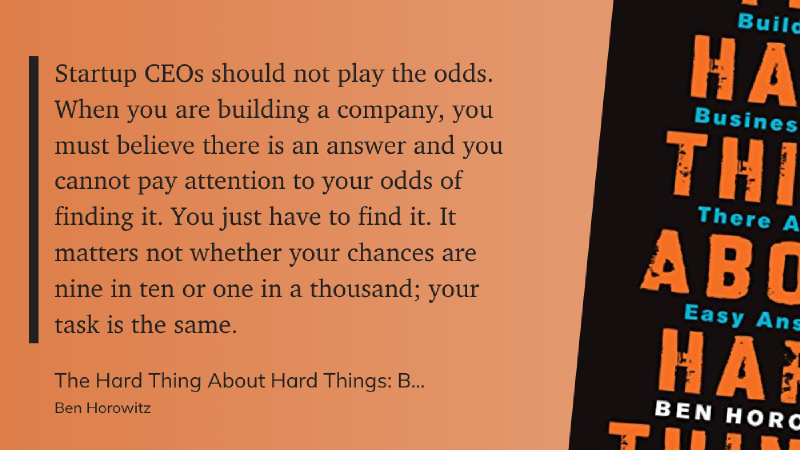
- Summary: Horowitz argues that startup CEOs must abandon probabilistic thinking in favor of absolute determination, focusing entirely on finding a solution regardless of how low the statistical odds of success may be.
- Why it Matters: In high-uncertainty environments, a “statistical” mindset often leads to hesitation or premature surrender. True leadership in a crisis requires a deterministic commitment to finding “the move,” even when it feels like there are no good moves left.
- My Take: Statistics are for spectators; calculus is for founders. When you are building something from nothing, your job isn’t to calculate the probability of the door being unlocked—it’s to find the one way to kick the door down. Conviction is the only hedge against entropy.
Creativity, Inc.#
The desire for everything to run smoothly is a false goal—it leads to measuring people by the mistakes they make rather than by their ability to solve problems.
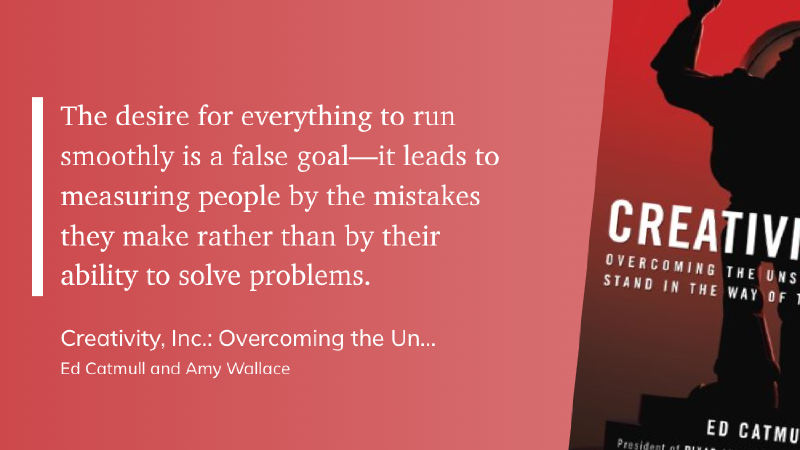
- Summary: Catmull argues that aiming for a perfectly smooth process is a mistake because it shifts focus toward punishing errors rather than fostering a culture of creative problem-solving and risk-taking.
- Why it Matters: In innovation, friction is often a byproduct of progress. Organizations that prioritize “smoothness” over “greatness” inevitably stifle the very messiness required to invent the future.
- My Take: Optimization is a trap if it hides problems. Real excellence isn’t found in a clean spreadsheet; it’s found in the collective courage to uncover hidden flaws and marshal the energy to fix them together.
The Lean Startup#
The only way to win is to learn faster than anyone else.
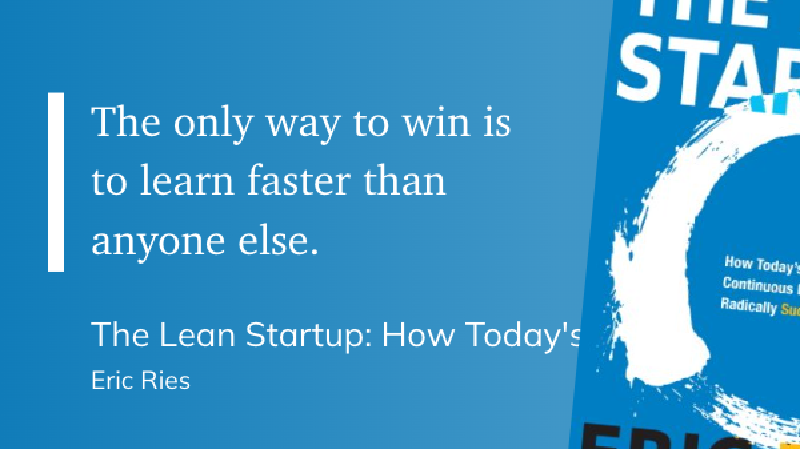
- Summary: Ries identifies the speed of “validated learning” as the primary competitive advantage for startups, emphasizing that the winner is the one who can iterate and adapt through the build-measure-learn loop the fastest.
- Why it Matters: In a rapidly shifting market, static plans are liabilities. Agility isn’t just about moving fast; it’s about the velocity of insight.
- My Take: The feedback loop is the ultimate moat. If you can learn from your customers and pivot your strategy faster than your competitors can execute their “perfect” plan, you have already won the game.
Looking for more? You can explore the archives of previous fast-twitch market observation and insights on the Signals page. Have Signals delivered directly to your inbox:
You're on the Pulse.
Success! Now check your email to confirm your subscription.
If these market observations are relevant to the operations of, or innovation at, your organization and you want to discuss these further and more indepth, let’s talk.
Book a Call