
This week’s signals converge on the intersection of Systemic Resilience and Cognitive Leverage. From Deming’s focus on system-level failures to the rapid collapse of exfiltration timelines for CISOs, the message is clear: the individual is no longer the bottleneck; the architecture is. We are seeing a “Structural Jevons Paradox” in AI where falling unit costs drive explosive total demand, while the “Innovation Stack” remains the only true moat against commoditization. As Steve Jobs predicted in 1983, we are in a perpetual “becoming,” where “coveillance” and embodied intelligence will redefine how we build and govern.
On Social#
A brilliant statistician who spent 50 years studying why massive engineering projects fail realized one terrifying truth:
— Chidanand Tripathi (@thetripathi58) March 29, 2026
Individual incompetence is almost never the actual problem.
His name is W. Edwards Deming, the man who famously rebuilt Japan's post-war manufacturing… pic.twitter.com/WfZIdahOr2
Summary: Re-examining W. Edwards Deming’s insight that 94% of failures are systemic, not individual.
Why it Matters: In high-stakes engineering and AI deployment, blaming “human error” is a lazy proxy for poor system design.
My Take: The system is the supervisor. If you can’t describe what you are doing as a process, you don’t know what you’re doing.
The attacker’s clock is faster than yours
— Evan Kirstel #B2B #TechFluencer (@EvanKirstel) March 27, 2026
This stat should keep every CISO up at night. Mean time to exfiltrate data has collapsed from nine days in 2021 to two days in 2023 to roughly 30 minutes by 2025. A 2025 MIT study found an AI model using Model Context Protocol achieved…
Summary: Data exfiltration time has dropped from 9 days in 2021 to 30 minutes in 2025.
Why it Matters: Cybersecurity is now a game of milli-seconds. AI-driven attacks outpace human-driven defense.
My Take: Latency is the new vulnerability. Defensive posture must be as autonomous as the threat.

The 5-Minute Setup That Gives AI Agents Full Access to Google Workspace
Summary: Google released a Workspace CLI (gws) that gives AI agents full access to productivity tools.
Why it Matters: AI is moving from “chat” to “action.” This is the plumbing for the Personal Finance Agent.
My Take: The API is the employee. We are building the nervous system for the autonomous enterprise. With agent access to the local filesystem as the killer use case for AI, the commend line interface (CLI) isn’t just back, it’s preferred.
Brilliant economic paper directly models the "Structural Jevons Paradox" happening right now in the AI industry.
— Rohan Paul (@rohanpaul_ai) March 7, 2026
The cost of running an LLM is dropping, but total computing energy is exploding anyway.
It mathematically proves that as the unit cost of digital intelligence and… https://t.co/795S4jWcjD pic.twitter.com/825YCwxjZ2
Summary: The “Structural Jevons Paradox” in AI means cheaper compute leads to higher total energy consumption.
Why it Matters: Efficient models don’t save energy; they enable more use cases, increasing total footprint.
My Take: Efficiency is an accelerant, not a brake. Plan for infinite demand in digital intelligence.
People get high on abstraction too early. They want the system before they’ve earned the insight.
— Garry Tan (@garrytan) March 7, 2026
But the good abstractions are never designed. They’re discovered. You do the stupid manual thing enough times and the real bottleneck just emerges. Your initial agency might be…
Summary: Good abstractions are discovered through manual work, not designed upfront.
Why it Matters: Founders often over-engineer systems before they understand the core bottleneck.
My Take: Do things that don’t scale to find the things that MUST.
Longer Reads#
🧠 Wallet Wars Pt 4: The Personal Finance Agent#
Summary: Deep dive into how Personal Finance Agents will replace traditional banking interfaces.
Why it Matters: The relationship between customer and bank is shifting to a relationship between agent and protocol.
My Take: Trust is the ultimate interface. Banks that don’t provide agentic access will become invisible utilities.
Could Prediction Markets Corrupt Canada’s Political Process?#
Summary: Analysis of the legal and political risks of Polymarket-style betting on elections.
Why it Matters: Prediction markets are the “truth machine,” but they collide with legacy regulatory frameworks.
My Take: Markets are sensors. Regulation should focus on transparency, not prohibition.
So Long to Sora#
Summary: Technically this one is a listen, not a read! Ben Thompson’s take on the rapid commoditization of video generation models was part of his weekly mailbag.
Why it Matters: The moat in AI is shifting from the model to the distribution and vertical integration.
My Take: Models are commodities; context is the moat.
Books#
The Inevitable#
Or could we construct a mutual, transparent kind of “coveillance” that involves watching the watchers?
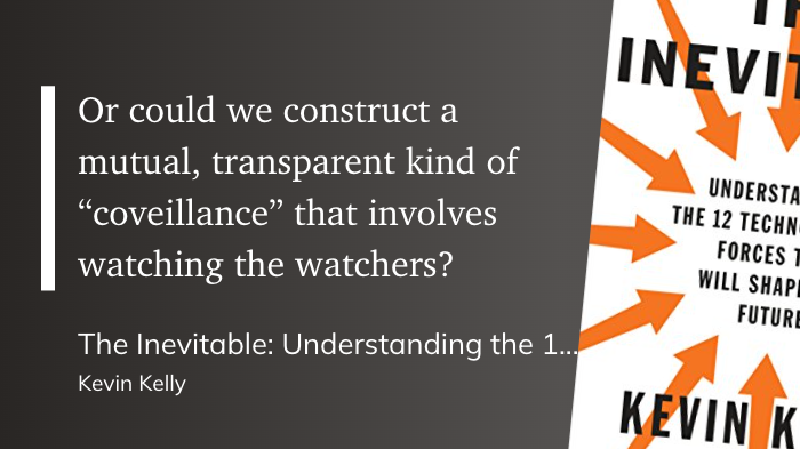
Summary: Kelly explores the shift from privacy to trust through transparent mutual monitoring.
Why it Matters: As AI monitors everything, we need reciprocal visibility to maintain institutional trust.
My Take: Privacy is a 20th-century luxury; Trust is a 21st-century necessity.
High Output Management#
Reports are more a medium of self-discipline than a way to communicate information. Writing the report is important; reading it often is not.
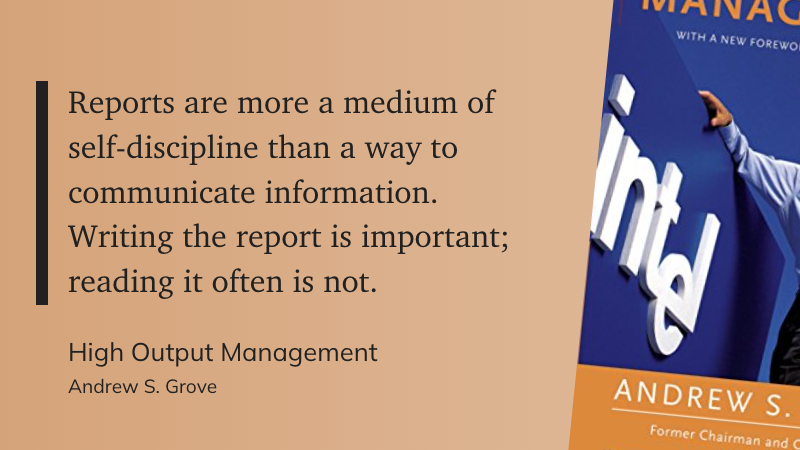
Summary: Grove argues the value of reporting is in the synthesis performed by the writer.
Why it Matters: In an era of AI-generated summaries, the act of human synthesis is the core of leadership.
My Take: Write to think, not to inform.
The Innovation Stack#
Copying and innovation are partners. If you choose to solve a perfect problem and create explosive growth, most of what you do will still be copying, you just won’t copy everything. Copy when you can; invent when you must.
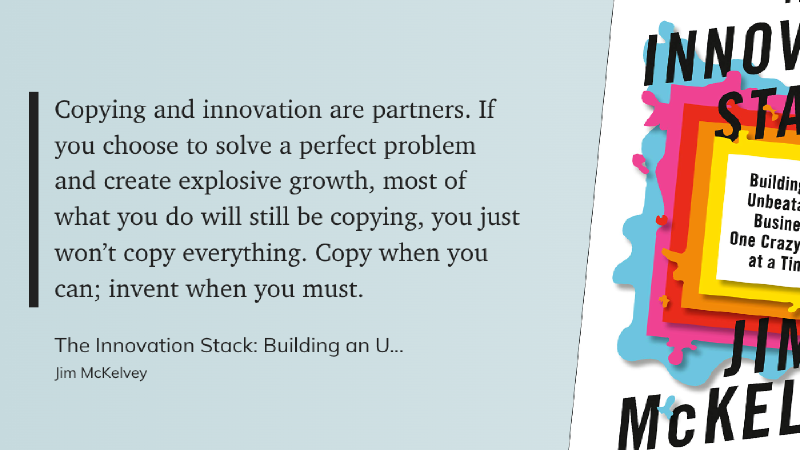
Summary: McKelvey highlights that true innovation is rare and usually born of necessity.
Why it Matters: Competitive advantage comes from the interlocking set of unique solutions to a hard problem.
My Take: Innovation is a defensive reaction. Don’t invent what you can buy.
Looking for more? You can explore the archives of previous fast-twitch market observation and insights on the Signals page and going forward, have it delivered directly to your inbox:
You're on the Pulse.
Success! Now check your email to confirm your subscription.