

This week’s signals point toward a fundamental shift in how we conceive of autonomous systems: the transition from “agent swarms” to “agent organizations.” As Ethan Mollick’s review of the Enron archive experiments suggests, the structure of the deployment—the hierarchy, the reporting lines, the management—is becoming more critical than the raw intelligence of the individual nodes. This mirrors the timeless leadership lessons from Benjamin Franklin: success isn’t about being the smartest person in the room; it’s about the discipline of the design and the humility of the process. Whether it’s a headless browser built from scratch for agents or a bot that bridges the digital-physical divide with direct mail, we are moving into an era where Infrastructure is Strategy.
Market Observations#
My OpenClaw bot builds websites & mails a postcard with a QR link to local businesses on autopilot...
— NOVA (@TechWith_Nova) March 14, 2026
You can use it to land new customers without a single cold call, here's how it works:
- Finds 100s of local businesses via Google Maps
- Builds each one a custom website in… pic.twitter.com/JVNaaYI4YQ
Summary: An automated system that identifies local businesses via Google Maps, builds custom websites, and triggers physical postcard mailings with QR links.
Why it Matters: This represents the closing of the digital-physical loop. In an era of infinite digital noise, physical touchpoints are becoming a high-conviction channel for customer acquisition.
My Take: Physical-Digital loops are the next moat. Automation that touches the physical world (direct mail) cuts through the inbox clutter. It’s an “analog prompt” that converts better than a thousand emails.

The Secrets of The Universe Lies in 'π' (Pi)
Summary: An exploration of the infinite, non-repeating nature of Pi and its unexpected appearances in various natural and mathematical phenomena.
Why it Matters: Fundamental constants are the bedrock of computational physics and encryption. Understanding the “irrational” patterns in nature often leads to breakthroughs in how we structure discrete data.
My Take: Pi is the architecture of the infinite. It’s a reminder that even in a world of discrete data, the continuous and the irrational provide the underlying structure.
This is a really interesting post using the Enron email archive to test how good agents are at navigating work, and it provides some helpful evidence that agent swarms are less useful than agent organizations. https://t.co/OEiWDsMuQ2
— Ethan Mollick (@emollick) March 14, 2026
Summary: Research using the Enron email archive suggests that structured “agent organizations” significantly outperform unstructured “agent swarms” in navigating complex corporate workflows.
Why it Matters: As AI moves into the enterprise, the management structure of the agents becomes the primary bottleneck. Hierarchy, it turns out, is a feature, not a bug, of complex coordination.
My Take: Organization is the new prompt engineering. If you want results, you don’t just need better models; you need better management structures for those models.
🚨BREAKING: Someone just open-sourced a headless browser that runs 11x faster than Chrome and uses 9x less memory.
— Ryan Hart (@thisdudelikesAI) March 12, 2026
It's called Lightpanda and it's built from scratch specifically for AI agents, scraping, and automation.
Not a Chromium fork. Not a hack. A completely new browser… pic.twitter.com/tjfAVabft4
Summary: Lightpanda is a headless browser built from scratch (not a Chromium fork) specifically for AI agents, offering 11x faster performance and 9x less memory usage.
Why it Matters: We are hitting the limits of “human-first” infrastructure. To allow agents to operate at global scale, we must strip away the overhead of the visual web.
My Take: Human-centric browsers are the bottleneck. To let agents run at scale, we need to move past the UI and focus on raw data throughput.
Reading List#
The Autobiography of Benjamin Franklin#
I made it a rule to forbear all direct contradiction to the sentiments of others, and all positive assertion of my own.
Source: The Autobiography of Benjamin Franklin
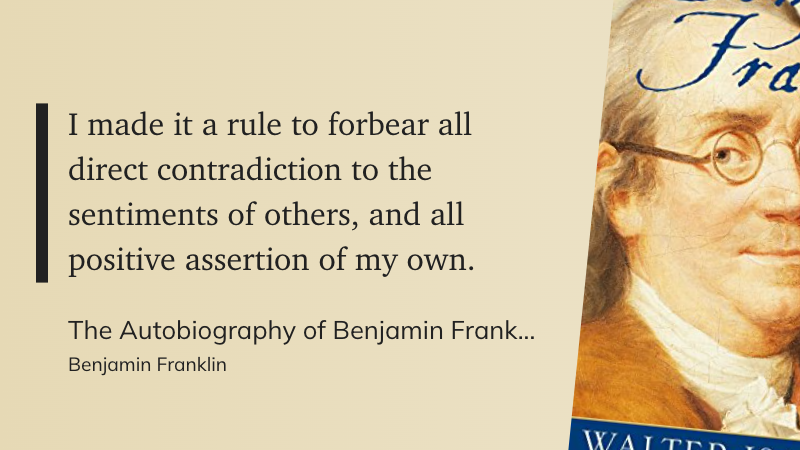
Why it Matters: Franklin’s system for self-improvement and his realization that ego is a barrier to persuasion are foundational for any leader attempting to drive change.
My Take: Humility is a tactical advantage. Franklin understood that to lead innovation, you must first remove the friction of ego. The best way to be right is to stop needing to be seen as right.
Looking for more? You can explore the archives of previous fast-twitch market observation and insights on the Signals page or subscribe to automatically receive them in your inbox!
You're on the Pulse.
Success! Now check your email to confirm your subscription.