
This week’s signals converge on the professionalization of the AI era. We are rapidly moving past the novelty of “vibe coding” into the discipline of Agentic Engineering, where the value shifts from generating snippets to architecting multi-agent systems. This mirrors the classic turnaround lessons from Ford (yes the car company, I promise I will make the connection!): success isn’t just about the engine; it’s about the Design Job of the entire business architecture. Whether it’s the maritime insurance markets of the 1700s or the local LLM context of today, the winner is always the one who best integrates high-signal information into a relentless implementation process.
The New Stack: Agentic Engineering#
We are as a society guilty of maintaining a false distinction between creative thinking and logical or empirical thinking, when in fact these are complementary processes that work in tandem. We can often intuit or envisage what a solution might look like, what properties it must…
— We need another Cromwell (@AriseLeviathan) February 2, 2026
Summary: A reflection on the false dichotomy between creative and logical thinking, arguing that they are complementary processes that must work in tandem.
Why it Matters: In an AI-saturated world, the “logic” is becoming a commodity. The competitive edge shifts to those who can intuit and envisage solutions before the empirical verification begins.
My Take: Thinking is a Full-Stack Activity. We’ve over-indexed on STEM logic at the expense of creative intuition. The best builders use intuition to define the “what” and logic to verify the “how.”
this 2 hour interview with Peter Steinberger (clawd) is a must-watch and i’m not even kidding. he explains his process, how he codes with AI, even advice for new grads.
— ℏεsam (@Hesamation) January 29, 2026
> he ships without checking the code
> uses 5-10 agents in parallel
> not vibe coding, “agentic engineering”
>… pic.twitter.com/WyRDc7KU6Y
Summary: Highlights from an interview with Peter Steinberger on his transition to “agentic engineering,” using 5-10 agents in parallel and shipping without manual code checks.
Why it Matters: This is the blueprint for the next generation of software development. It’s no longer about writing code; it’s about orchestrating agents to handle the complexity.
My Take: The Manager is the New Coder. We are moving from being individual contributors to being governors of an automated workforce. If you aren’t building your agentic swarm, you are the bottleneck.

How to Make Your AI Agent Its Own Forward-Deployed Engineer
Summary: An analysis of the Palantir “Forward Deployed Engineer” (FDE) model applied to AI agents, emphasizing the need for agents to embed deeply in customer domains.
Why it Matters: Pure software is a race to the bottom. Indispensability comes from domain-specific customization: something FDEs have done for years and agents must now replicate.
My Take: Context is the Moat. An agent that understands the general rules is a tool; an agent that understands your specific constraints is an asset.
Strategy & Implementation#

Local AI agents will win. It's all about context.
Summary: Edouard argues that the real power of tools like Cursor isn’t the LLM itself, but the local context it has over your entire codebase.
Why it Matters: Privacy and latency aside, the winner in the agent space will be whoever has the richest local data set to feed the model.
My Take: Data Gravity is Absolute. The “Cursor-pill” moment is realizing that the model is only as smart as the folder it’s sitting in.
AI coding agents produce syntactically correct code. However, they don’t produce useful layers of abstraction nor meaningful modularization. They don’t value conciseness or improving organization in a large code base. We have automated coding, but not software engineering. 10/
— Rachel Thomas (@math_rachel) January 27, 2026
Summary: Rachel Thomas argues that while AI has automated coding (syntax), it has not yet automated software engineering (abstraction, modularization, and modularity).
Why it Matters: We are creating a massive amount of “correct” but unmaintainable code. The role of the engineer is now to defend against the entropy of automated output.
My Take: Engineering is the Art of Saying No. Just because an agent can generate 1,000 lines of code doesn’t mean you should have them. We need more architects, fewer typists.

Lessons from Building AI Agents for Financial Services
Summary: Battle scars from two years of building AI for the highly regulated and complex financial services sector.
Why it Matters: Finance is the ultimate testing ground for agent reliability. If it works here, it can work anywhere, but the failure modes are catastrophic.
My Take: Trust but Verify (Automatically). In Fintech, the agent is the player, but the “guardrail” system is the referee. You can’t have one without the other.
From the Library#
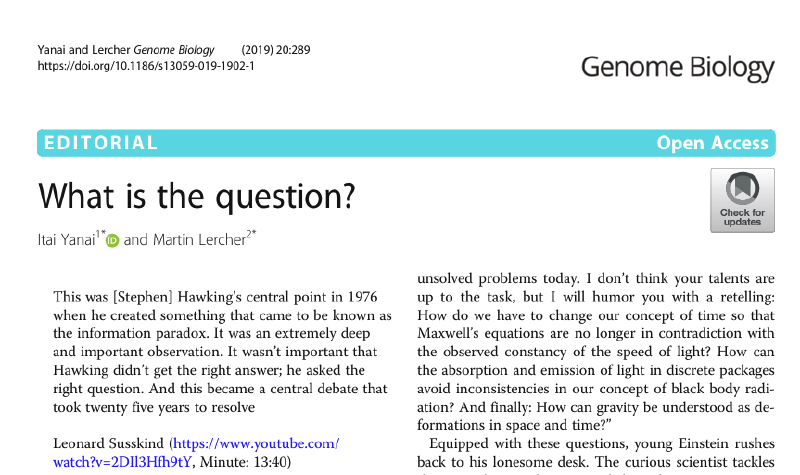
What is the question? (Itai Yanai & Martin Lercher)
Summary: An exploration of “night science”, the creative, messy process of finding the right questions rather than just solving provided problems.
Why it Matters: As AI becomes better at answering questions, the value of the human question-asker increases exponentially.
My Take: The Question is the Strategy. If you don’t know what you’re looking for, you’ll find a lot of noise very quickly.
Deep Dives & Highlights#
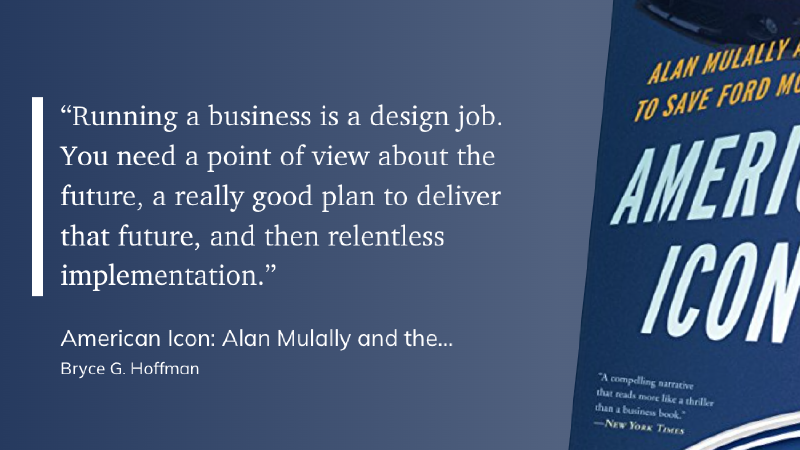
From Bryce G. Hoffman’s American Icon
Why it Matters: Alan Mulally’s turnaround of Ford is the definitive masterclass in Unity of Command. He didn’t just fix cars; he redesigned the way the company thought.
My Take: Systems Over Symbols. Most CEOs focus on the logo. The greats focus on designing the machine behind the machine: the systems, the heartbeat of the machine.
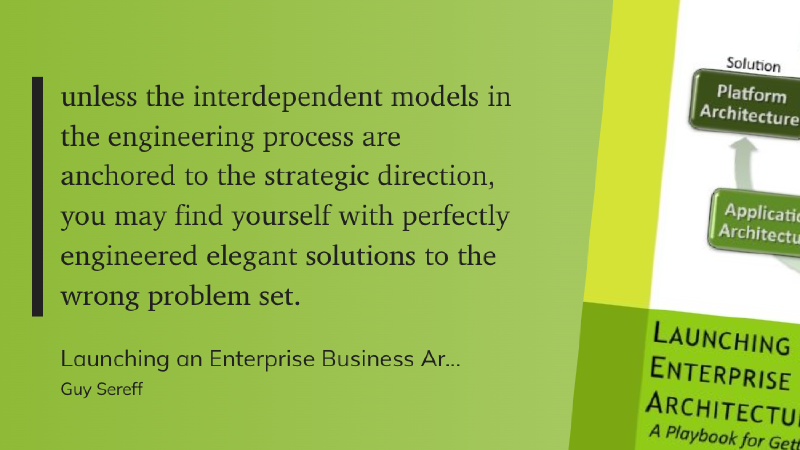
From Guy Sereff’s Launching an Enterprise Business Architecture Practice
Why it Matters: This is the “Mulally” lesson applied to IT. If your architecture isn’t a direct reflection of your strategy, you are just spending money on entropy.
My Take: Architecture is Strategy in Code. If your CTO and CEO aren’t speaking the same language, you are building a bridge to nowhere.
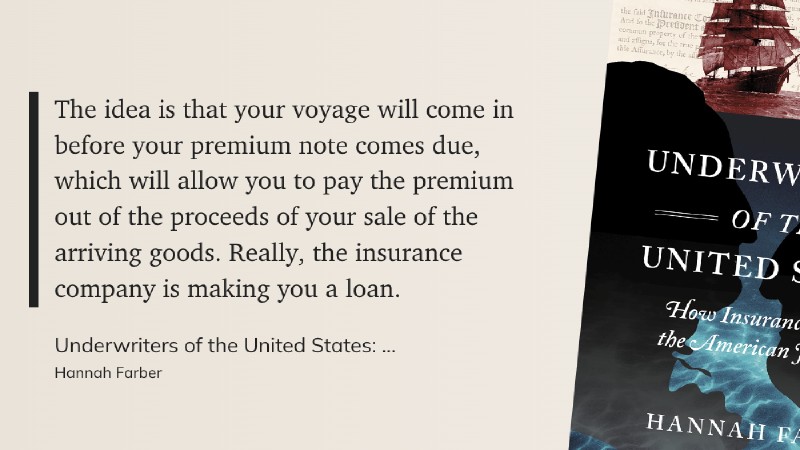
From Hannah Farber’s Underwriters of the United States
Why it Matters: Maritime insurance was the original “Fintech.” It enabled the global trade that built the modern world by financializing risk.
My Take: Finance is a Time Machine. It allows you to pull future success into the present. Every great venture is built on this leverage.