
Quick Answer
Deploying AI effectively means placing a Model (the brain) inside a secure Harness (the workplace), equipping it with a Context Window (desk space) and Memory (notebook). We manage Tokens (raw material costs), provide Prompts (strategic briefs) that activate Skills (SOPs), and use Tools (software) within an automated Loop (quality control), all verified by Evals (KPI scorecards).
What is the Core Cognitive Engine?#
1. The Model#
- What it is: The foundational brain of the AI. A mathematical framework trained on massive datasets to recognize patterns, predict outcomes, or generate content.
- The Business Analogy: An incredibly sophisticated, predictive spreadsheet. Instead of just forecasting next quarter’s revenue based on two variables, it forecasts the next most logical output based on billions of variables.
- Strategic Value: You choose or build a model optimized for your specific business use case (e.g., risk calculation, image generation, or customer churn prediction).
2. The LLM (Large Language Model)#
- What it is: A specific type of model trained on vast amounts of text. It excels at understanding, summarizing, translating, and generating human language.
- The Business Analogy: The ultimate corporate generalist. Imagine a management consultant who has read every public document on the internet. They know a lot about everything, but they lack your specific company’s context until you give it to them.
- Strategic Value: LLMs are the cognitive engines behind modern chatbots, automated report generation, and contract analysis tools.
How Does the AI Process and Retain Data?#
3. Context & Context Window#
- What it is: Context is the specific background data given to the AI for a task. The Context Window is the maximum physical limit of data the AI can read, process, and hold in its “mind” at one exact moment.
- The Business Analogy: The desk space or briefing binder. A small context window means a tiny desk (you can only review one invoice at a time). A massive context window means a massive boardroom table where the AI can lay out and read entire legal libraries or quarters of financial data all at once.
- Strategic Value: A larger context window allows you to feed entire corporate codebases or multi-hundred-page regulatory documents directly into a single prompt without the AI “forgetting” the beginning of the file.
4. Token#
- What it is: The fundamental unit of data that an LLM reads, processes, and generates. An LLM doesn’t see words; it breaks text down into tokens (one token is roughly 4 characters, or about 3/4 of an English word).
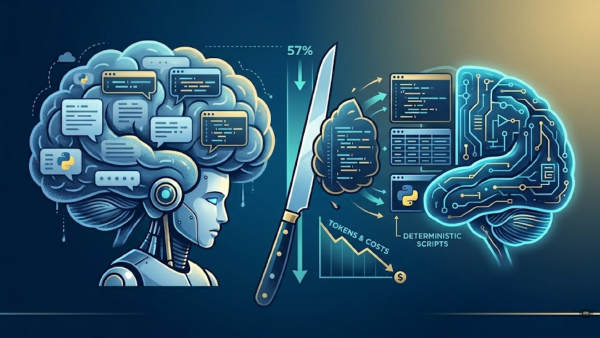
- The Business Analogy: The raw material units or metered usage on a corporate cellular/cloud data plan. You don’t pay for AI by the minute or by the hour; you pay by the token consumed and produced.
- Strategic Value: This is your core unit of cost and performance. Every time your system calls an AI, the meter runs on tokens. Understanding token efficiency is critical for managing your AI operating expenses (OpEx) and calculating ROI.
5. Memory#
- What it is: The mechanism that allows an AI system to persist, store, and recall information across multiple interactions, days, or weeks (long after the immediate context window has cleared).
- The Business Analogy: The corporate CRM, database, or an employee’s rolling project notebook. Without memory, every time you talk to an AI, it has total amnesia. With memory, it remembers customer preferences and past project updates.
- Strategic Value: Memory is the secret to hyper-personalization and true multi-day task execution. It transforms a transactional utility into a deeply contextual partner that learns your business operations over time.
How Do We Direct the AI?#
6. The Prompt#
- What it is: The input, question, or instruction you give to an AI model to get a specific output.
- The Business Analogy: The strategic delegation memo. If you give a direct report a vague instruction like “Fix the marketing report,” you will get a messy result. If you give them clear constraints, context, and a defined goal, you get an executive-ready deliverable.
- Strategic Value: “Prompt Engineering” is simply the art of precise delegation. Standardizing high-performing prompts across your organization guarantees consistent AI outputs.
7. The Agent#
- What it is: The complete, unified system (Brain + Body) designed to autonomously pursue a specific goal by breaking it down into steps, making decisions, and taking actions.
- The Business Analogy: A digital employee. While a standard LLM waits for you to ask a question, an Agent is given a mandate (e.g., “Reconcile these 500 invoices”) and figures out the workflow to achieve it independently.
- Strategic Value: This is where true enterprise ROI lies. Shifting from passive chatbots to active, autonomous agents transforms AI from a novelty tool into digital headcount.
What Are Its Tools and Workflows?#
8. The Tool#
- What it is: An external, executable function or API that an AI can use to perform a discrete action (e.g., reading a file, searching the web, or executing a command).
- The Business Analogy: The physical assets or software access you give a worker. Tools are the “hands” of the agent: a calculator, a CRM login, or an email terminal.
- Strategic Value: AI models are naturally isolated. By connecting models to tools (like your internal ERP or database), you allow them to interact with and alter the real world.
9. The Skill#
- What it is: Packaged expertise, procedural knowledge, and standard operating procedures (SOPs) that tell the agent how and when to use its tools responsibly.
- The Business Analogy: The employee handbook or training manual. A tool gives an agent the capability to send an email; a skill gives the agent the business judgment to know what the email should say, who needs to review it, and when it is safe to hit send.
- Strategic Value: Skills prevent “context bloat” and keep agents safe. Instead of cramming every rule into a giant prompt, skills allow agents to dynamically load specific business playbooks only when a task demands them.
10. The Loop#
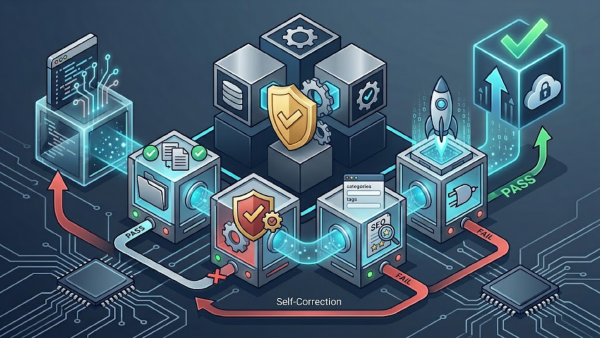
- What it is: The iterative reasoning cycle where the AI evaluates a problem, takes an action, looks at the result, and adjusts its next steps until the goal is achieved.
- The Business Analogy: The standard corporate feedback loop (Plan-Do-Check-Act). Instead of just spitting out a first draft, the AI reviews its own output against your criteria, catches its own errors, and fixes them before you ever see it.
- Strategic Value: “Agentic loops” drastically increase the accuracy of AI systems, allowing them to handle complex, multi-stage workflows without human intervention at every step.
How Do We Deploy and Evaluate the System?#
11. The Harness#
- What it is: The runtime application framework, terminal environment, and security workspace that houses the model, manages its memory, handles permissions, and connects it to tools.
- The Business Analogy: The physical office building, IT security infrastructure, and corporate workstation. The model is the brain, but the harness (like
pi.devorHermes) is the secure infrastructure that keeps the brain contained, powered, and connected to the corporate grid safely. - Strategic Value: Your choice of harness dictates your security posture. A great enterprise harness ensures the AI operates in a sandboxed environment where it can run code safely without risking your corporate network.
12. The Eval (Evaluation)#
- What it is: A standardized benchmark or automated test suite used to quantitatively measure an AI system’s accuracy, latency, cost, and safety.
- The Business Analogy: The Key Performance Indicator (KPI) scorecard or quarterly performance review. You don’t evaluate a human manager on “vibes” (you look at hard numbers). Evals ensure your AI is hitting its targets.
- Strategic Value: Evals prevent regression. When engineering updates a model, tweaks a prompt, or adds a new tool, running an Eval instantly tells you if the agent got smarter or if it accidentally broke a business rule that worked yesterday.
How Does It All Fit Together in Production?#
Here is how these components interact in a production-ready enterprise environment:
| Technical Term | Strategic Function | Enterprise Equivalent |
|---|---|---|
| Model / LLM | The Core Cognitive Capability | The Talent Pool / Brain |
| Harness | The Runtime Infrastructure & Security | The Workplace / Corporate Workstation |
| Context / Window | Immediate Bandwidth & Input Capacity | The Desk Space / Briefing Binder |
| Token | The Unit of Compute, Volume, & Cost | Raw Materials / Metered Usage Units |
| Memory | Long-Term Data Retention & Continuity | The Corporate CRM / Notebook |
| Prompt | The Input & Objective | The Strategic Brief / Memo |
| Tool | The Executable Capabilities | The Corporate Software Stack (Hands) |
| Skill | The Packaged Operational Expertise | The SOP / Employee Training Manual |
| Loop | The Iterative Execution Cycle | The Quality Control Process |
| Eval | Performance Benchmarking & QA | The KPI Scorecard / Performance Review |
| Agent | The Whole Functional System | The Digital Workforce / Operator |
Frequently Asked Questions
? How do tokens relate to my overall AI IT budget?
Tokens are the fundamental unit of consumption for AI models, similar to paying for cloud compute or mobile data. Since you pay per token processed (both input context and generated output), optimizing prompts and managing context windows directly reduces your AI operating expenses.
? What is the difference between a Model, an LLM, and an Agent?
A Model is the core mathematical framework. An LLM is a specific type of model trained to understand language. An Agent is a complete system that pairs a model with tools, memory, and an iterative loop, enabling it to act autonomously rather than just answer questions.
? Why are Evals critical for enterprise AI deployment?
Evals (Evaluations) act as the KPI scorecards for AI systems. They provide standardized, quantitative benchmarks to ensure that any updates to a model, prompt, or tool improve performance without breaking existing business rules or compromising safety. Critically, evals can be used by the agents themselves to check their work, self-heal and self-improve. Evals are often a key component of loops.