
Strategy
Quick Answer
Strategy is the bridge between a high-level vision and the cold reality of the market. It requires identifying the strategic bottlenecks and structural friction that prevent scale, then executing with surgical precision to capture market share.
Pragmatic Execution: Moving Beyond the Slidedeck#
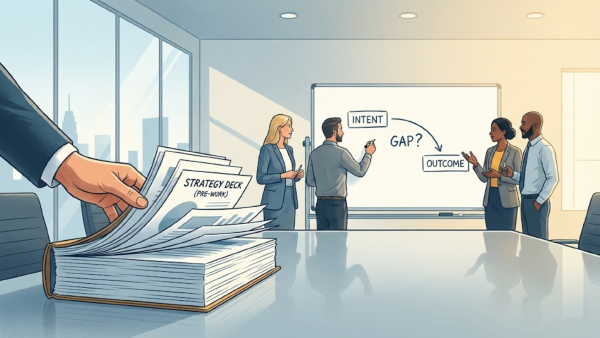
Most strategies fail not because the vision was wrong, but because the execution was impractical. In the C-Suite, the “Strategy” is often a beautiful artifact that ignores the gravity of existing operations.
My approach focuses on Pragmatic Execution—aligning the organization’s incentives, capabilities, and resources so that the strategy isn’t just a document, but a lived reality. This means identifying the “strategic bottlenecks” early and solving for them before they stall your momentum.
Market Entry and Structural Friction#
Entering a new market is an exercise in friction management. Whether it’s regulatory hurdles, cultural nuances, or incumbent resistance, Market Entry requires more than just a capital allocation; it requires a deep understanding of the Structural Friction unique to that geography or sector.
We look at market entry through the lens of “The Januszczak Method”:
- Friction Audit: Where will the organization push back?
- Asset Arbitrage: What “unfair advantages” do we bring from the home market?
- Local Contextualization: Why should this market care that we exist?
The C-Suite Reality of Strategy#
Strategy is fundamentally about choices—specifically, what not to do. In a world of infinite options, the executive’s job is to narrow the focus to the 2-3 levers that will actually move the needle.
Frequently Asked Questions
? How do you balance long-term vision with quarterly pressure?
The secret is “Bimodal Strategy.” You protect the long-term vision with a dedicated team and budget (the “Venture” mindset) while optimizing the core business for quarterly results. You don’t mix the two, or the core will always cannibalize the future.
? What is the most common reason strategy fails?
Lack of “Strategic Clarity” at the middle-management level. If your managers can’t explain the strategy in one sentence and how it changes their daily priorities, you don’t have a strategy—you have a wish list.
? How do you identify 'Structural Friction' in a legacy organization?
Look at the “No’s.” Track where new ideas go to die—is it Legal? Procurement? Middle Management? Those are your friction points. You don’t fight them; you architect your strategy to bypass them.
Featured Insights on Strategy#