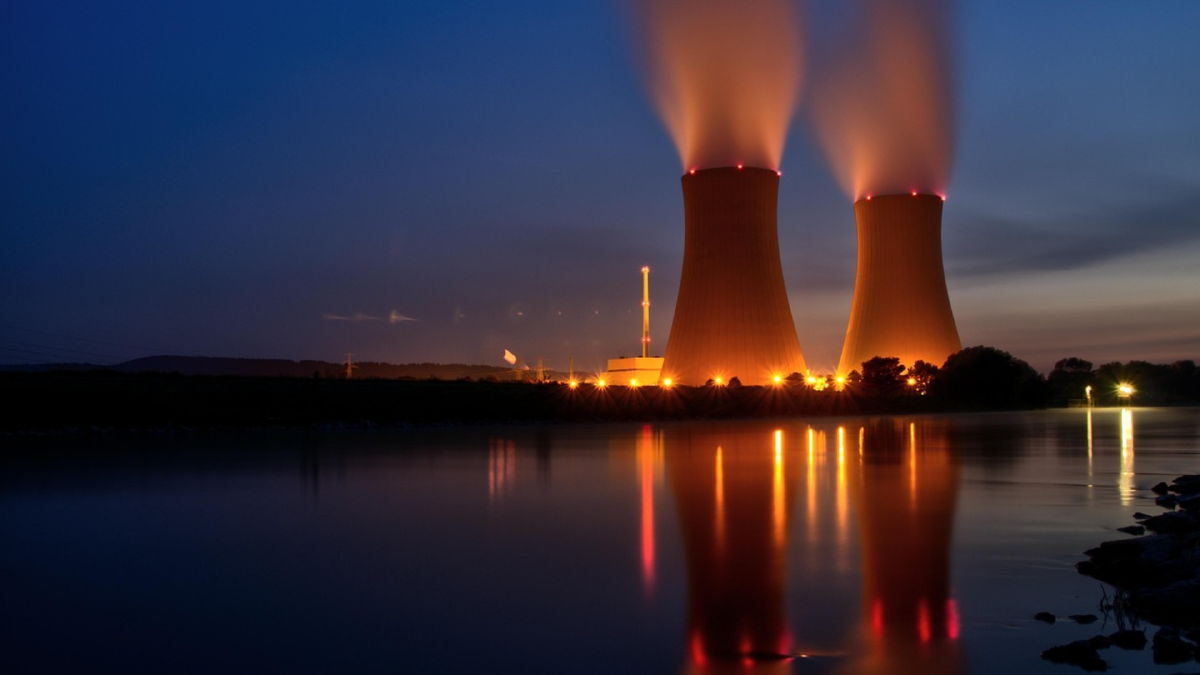

Imagine this: The world’s most valuable AI companies aren’t bottlenecked by chips, models, or even talent. They’re waiting on turbines. As Elon Musk recently highlighted in a widely circulated post, power plant manufacturing capacity (not compute or code!) is the real gatekeeper to scaling AI data centers. Backlogs stretch for years. Permitting drags on for longer. And the physics of energy is proving far more stubborn than any algorithmic breakthrough.
For strategists and investors, this isn’t just an infrastructure hiccup. It’s the moment the credit card bill arrives after a 15-year spending spree on software’s easy, capital-light returns. Venture capital got hooked on bits. Now AI is demanding atoms and the hangover is here.
Silicon Valley’s Forgotten Hardware Roots#
It wasn’t always this way. Venture capital’s original magic in Silicon Valley was built on hardware.
In the 1950s and ’60s, investors like Arthur Rock backed the “Traitorous Eight” at Fairchild Semiconductor with $1.5 million, the deal many historians call the first true modern VC investment in a team, not a product. Fairchild spun out Intel, which commercialized microprocessors and powered the personal computer revolution. Hewlett-Packard, founded in 1939 in a Palo Alto garage, became the archetype of Valley innovation, blending engineering heft with scalable manufacturing.
These were atoms businesses: fabs, supply chains, physical capital. Returns came from building defensible moats in semiconductors and systems. VC wasn’t afraid of capex; it was the point. The model worked because hardware scaled with Moore’s Law and defense-driven demand, creating trillion-dollar industries.
The Cleantech Burn That Reinforced the Addiction#
Then came the detour. In the mid-2000s, VCs chased the “original energy transition.” Between 2006 and 2011, roughly $25 billion poured into cleantech startups: solar, biofuels, advanced batteries, thin-film innovations. John Doerr famously called greentech “bigger than the internet.”
The results were brutal. More than 50% of that capital was lost by 2015. Solyndra, the poster child, raised over $1 billion in VC and government loans before collapsing under cheap Chinese silicon panels and falling commodity prices. Dozens of others such as KiOR, A123, and BrightSource followed into financial distress if not outright bankruptcy. Nearly all 150 renewable startups founded in Silicon Valley during the boom eventually failed or limped away.
The trauma was visceral. VCs learned (or overlearned) that hardware-heavy bets carried regulatory risk, manufacturing scale challenges, and commodity exposure. Returns were slow, lumpy, and often negative. Software, by contrast, offered velocity: near-zero marginal costs, 70-80% gross margins, network effects, and recurring revenue. ZIRP (zero-interest-rate policy) supercharged it. Why grind through turbine lead times or permitting hell when you could fund the next SaaS unicorn in 18 months?
The addiction set in. VC portfolios tilted hard toward bits. Hardware became “unfundable” unless it was a software-adjacent pick-and-shovel play.
AI’s Cruel Irony: Democratizing Software, Starving for Atoms#
AI is now exposing the trap.
Large language models and generative tools have commoditized software development. Anyone with Cursor or Claude can ship production-grade code in days. Moats erode overnight. Pure software plays risk becoming interchangeable utilities.
Yet the same AI driving this democratization is creating unprecedented demand for physical infrastructure. Training and inference at scale devour gigawatts. Data centers now rival small cities in electricity consumption. The bottleneck isn’t models. It’s power.
Big Tech’s capex numbers tell the story. In 2026, Alphabet, Amazon, Meta, and Microsoft are on track to spend a combined $725 billion, up 77% from last year’s record. Projections for 2027 push toward $1 trillion annually. This isn’t marketing spend or office fit-outs. It’s turbines, substations, custom chips, nuclear restarts, and on-site gas generation. Hyperscalers are issuing debt and signing PPAs at industrial scale because their balance sheets can’t keep pace.
We lived off the software dividend: high ROIC on borrowed time and cheap capital. The bill is due. AI has made software abundant. Atoms: energy, manufacturing, and grids are scarce again.
What Comes Next: Insights for Strategists and Investors#
This shift isn’t temporary. It’s structural. Intelligence now runs on physics, not just prompts. The market is correcting a decade of imbalance.
Key Insights#
- Software’s golden era is closing for pure plays. Value is migrating up the stack (AI-native applications) and down (energy and infra moats). The winners will own the atoms layer.
- VC’s role is evolving, not disappearing. Traditional seed/Series A software is getting starved. But specialized deeptech and infra funds are seeing inflows. Institutional capital (pensions, sovereign wealth) is eyeing behind-the-meter energy and data center co-location.
- Policy and permitting are now competitive advantages. U.S. timelines for power plants can span years; elsewhere, they don’t. The companies and regions that solve energy bottlenecks fastest will capture disproportionate upside.
- Risk of over-correction exists. Not every turbine play or SMR startup will win. Commodity exposure and execution risk remain real just as they did in Cleantech 1.0. But the demand signal is orders of magnitude stronger this time.
Actionable Recommendations#
For venture capitalists and LPs: Rebuild hardware muscle. Allocate 20-30% of new funds to energy/infra/deeptech. Partner with Big Tech for de-risked co-investments (hyperscalers are already funding gigawatt-scale projects). Focus on proprietary technology that’s 10x better, not incremental. Look for teams that understand both physics and permitting.
For corporate strategists: Treat energy as a core competency. Accelerate on-site generation, behind-the-meter storage, and vertical integration with power providers. Model your AI roadmaps against realistic power availability, not optimistic grid projections. Lobby aggressively for regulatory reform: streamlined permitting could unlock trillions in economic value.
For institutional investors and allocators: Diversify beyond software multiples. Energy infrastructure, grid tech, nuclear (including SMRs), and advanced manufacturing now offer durable, inflation-hedged returns with real assets attached. Watch for hybrid models where private capital funds “energizers” (utilities, equipment makers) alongside builders.
For policymakers (and those who influence them): Recognize that AI’s economic upside depends on atoms. Fast-track energy projects the way we fast-tracked vaccines or broadband. The alternative is ceding leadership to jurisdictions that actually build.
The software party was fun. It created enormous value and trained a generation of operators. But AI has flipped the script: bits are now cheap; atoms are the scarce resource that will determine who scales intelligence next.
The bill is due. Pay it wisely and the next wave of Silicon Valley-scale fortunes will belong to those who remember how to build in the physical world.