
A bit of a meme this week on X with developers debating when to skip AI-generated code reviews:
I wanted to elevate the debate on AI-generated code reviews from a developer discussion to executive strategy because it directly shapes competitive advantage, operational efficiency, and risk exposure in an era of accelerating abstraction.
Just as the historical shift from assembly to high-level languages enabled companies to scale software development dramatically, freeing talent from low-level drudgery to focus on innovation and architecture, AI coding tools now promise a similar leap in productivity. Executives who treat this as merely a tactical tooling question miss the broader business implications: how much faster can teams ship features, reduce costs, and reallocate human capital toward high-value strategic work like product design and market differentiation?
At the same time, decisions around review policies, verification tooling, and trust thresholds carry enterprise-level stakes around quality, security, compliance, and intellectual property. A risk-based approach (e.g., autonomous AI agents for low-stakes code paired with rigorous human oversight for core systems) can unlock exponential output gains while mitigating downsides, but only if leadership sets clear guardrails, invests in enabling infrastructure like robust testing and telemetry, and cultivates a culture comfortable with higher abstraction layers. In short, this is not about code. It’s about redefining organizational velocity and capability in the AI era.
The Shift in Developer Abstraction#
In the history of software engineering, we have consistently sought higher levels of abstraction. We move away from the raw hardware to focus on business logic, user experience, and systems architecture. AI coding assistants (like Cursor, Copilot, and Claude) represent the latest leap in this ongoing cycle.
As industry leaders now openly acknowledge, handwriting syntax line-by-line is rapidly becoming an unviable economic proposition in favor of directing agentic workflows (see Signals: Week 41, 2026).
To understand why this is inevitable, we only need to look at how we got here.
How Did Compilers Change Software Engineering?#
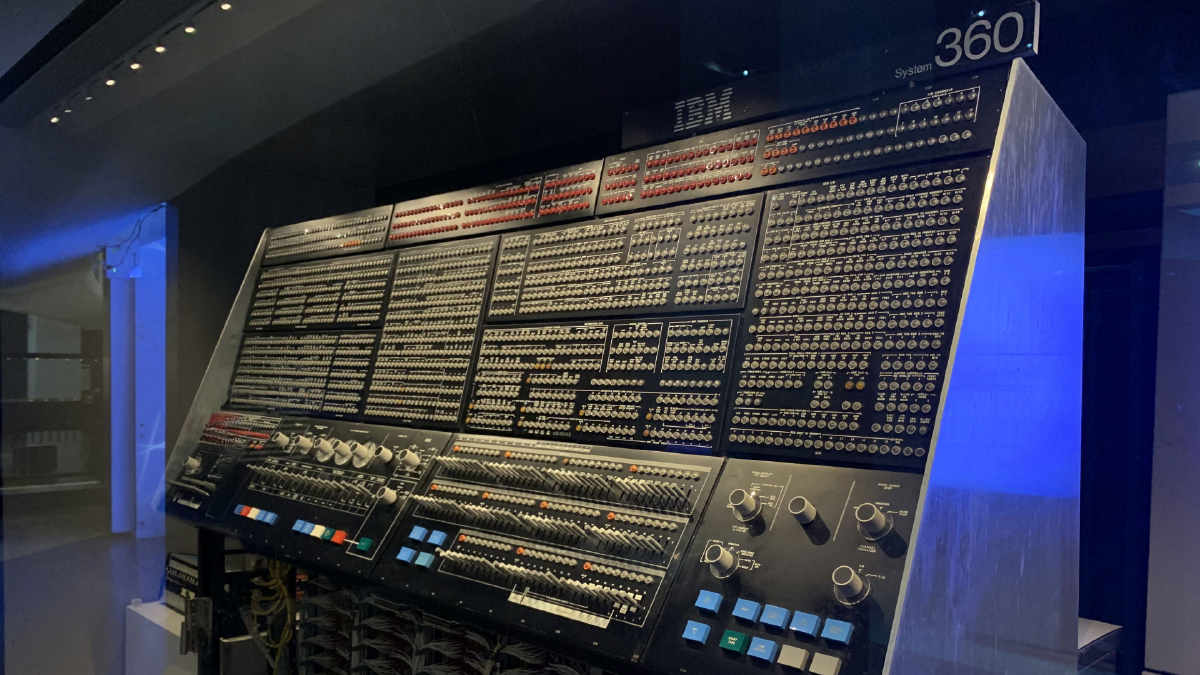
In the early days of computing, writing software meant operating at the hardware level.
- Machine Code and Assembly: Programmers wrote instructions directly in binary or mnemonics for specific registers and memory addresses. It offered maximum hardware control, but it was tedious, error-prone, and exceptionally slow to write. Maintenance and portability were major bottlenecks.
- The Rise of High-Level Languages: Languages like Fortran, C, and later Python, allowed programmers to express logic in human-friendly terms (loops, functions, and objects). Compilers and interpreters took over the job of translating this intent into efficient machine code.
When compilers first emerged, skeptics argued they produced bloated, inefficient code and that a real programmer should not trust what they did not write themselves. Yet, the massive gain in developer speed, the reduction of low-level bugs, and the freedom to focus on system design ultimately won. Today, developers rarely inspect the generated assembly unless optimizing and improving the most frequently executed (or most time-consuming) sections of code in a program.
Why is AI the Next Compiler?#
Large Language Models do not replace the developer: they serve as the next level of compilation. AI tools translate natural language intent, specifications, and architecture descriptions into code.
- Elevated Abstraction: You describe what you want (the system flow, the data structures, the business rules) instead of manually typing out every line of syntax.
- Boilerplate Delegation: The AI handles scaffolding, routine tests, and syntax formatting, similar to how a compiler handles register allocation or instruction scheduling.
- Focus on System Design: Advanced developers see this as the natural progression. Writing every line of code by hand will eventually feel as low-level as writing assembly does today. The same move toward higher-level reasoning sits at the center of the debate over world models, while returning to the fundamentals of system components remains the ultimate foundation for engineers, as noted in the commentary on Signals: Week 32, 2026.
Does This Mean We Stop Reading and Reviewing Code?#
Absolutely not. Treating AI as a compiler does not imply blind trust. The analogy runs deep here as well:
- With traditional compilers: You do not read the binary output, but you absolutely read, test, debug, and profile the high-level source code you wrote.
- With AI “compilers”: You do not have to write the boilerplate, but you must review, test, and validate the code that is generated.
Experienced developers know that AI-generated code can look clean and correct while harboring subtle logic flaws, incorrect assumptions, or inefficiencies. Human oversight, unit testing, static analysis, and code reviews are more critical than ever to ensure quality. The developer shifts from a manual writer of syntax to an editor, architect, and verifier.
Frequently Asked Questions
? Is AI replacing software engineers?
? How do you ensure quality with AI-generated code?
Further Reading#
- Moats in the Era of Vibe Coding: Why faster software creation does not, by itself, create a durable advantage.
- The Most Brilliant Failure in Tech: What Leaders Can Learn from BeOS: Why superior engineering still loses when the ecosystem is missing.