
In early 2019, a rural bank manager in Mindanao was telling us it took her team twenty manual steps, and several days, just to settle a single payment with Manila. She was standing on an island of cash, but she was digitally stranded. While the rest of the global fintech community was theorizing about ’tokenization’ in air-conditioned conference rooms, we were in the mud, building a bridge.
The Execution Gap#
In 2019, the global financial discourse was consumed by theory. Silicon Valley was locked in a regulatory stalemate over Facebook’s Libra, and central banks were years away from their first CBDC pilots. While the “West” was stuck in whitepapers and air-conditioned conference rooms, we were on the ground in the Philippine provinces.
We weren’t just predicting the future of programmable money; we were building it. We launched PHX, the first bank-backed, BSP-cleared digital peso, not as a crypto-experiment, but as a weapon against the systemic friction of an archipelago economy. Real-world fintech isn’t won with the most elegant code; it’s won on the execution battlefield where technology meets the “mud” of rural infrastructure.
The Rural Bank “Island” Problem#
The Philippines is a nation of over 7,000 islands, and its financial system was historically just as fragmented. In 2019, nearly 70% of the population was unbanked, but the deeper crisis was that the 400+ rural banks, and countless non-bank financial institutions serving them were “islands” themselves.
These institutions were the lifeblood of the provincial economy, yet they were excluded from the national digital grid. A simple remittance from a remote province to Manila could involve over 20 manual intermediation steps, often taking days to settle. The problem wasn’t a lack of banks; it was that the banks were digitally stranded.
The Innovation: PHX and the i2i Platform#
Our solution was Project i2i (Island-to-Island, Institution-to-Institution, Individual-to-Individual), a blockchain-based clearing system powered by the PHX stablecoin. PHX was a 1:1 reserve-backed digital peso residing on an Ethereum ledger.
By July 2019, we had connected 35 rural banks across 150 branches. This was “programmable fiat” in its purest form. It allowed us to move value at the speed of data, turning days of reconciliation into seconds of finality. By August 2019 alone, the platform was already facilitating over $1 million in transaction volume, proving that utility, not speculation, is the true driver of stablecoin adoption.
The Strategic Masterstroke: National Interoperability#
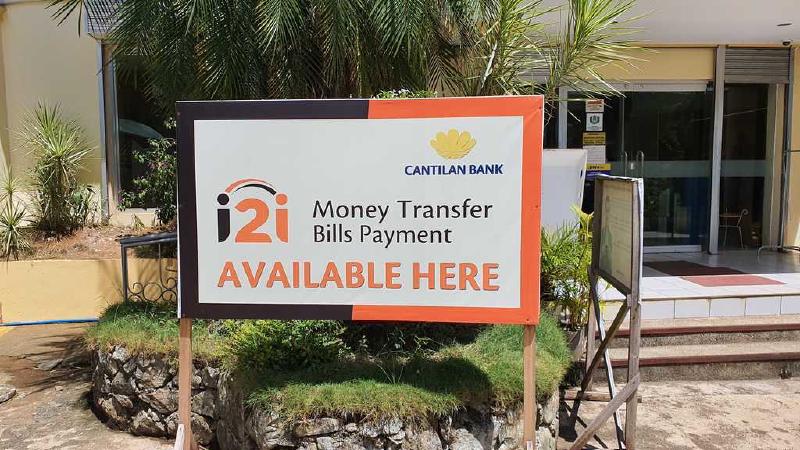
A stablecoin is only as valuable as its on and off-ramps. The critical leap for i2i was ensuring it didn’t become a “walled garden.” We made the strategic decision to bridge the i2i blockchain directly into the Philippines’ National Retail Payment System (NRPS), specifically InstaPay and PESONet.
This provided an “exit ramp” for the digital peso. A farmer in Mindanao could receive funds via i2i, and those funds could be instantly pushed out to any major commercial bank or e-wallet in the country. By leveraging regulated, national rails, we proved that stablecoins are the ultimate “invisible plumbing” for a modern economy.
Regulatory Leadership: The Sandbox Blueprint#
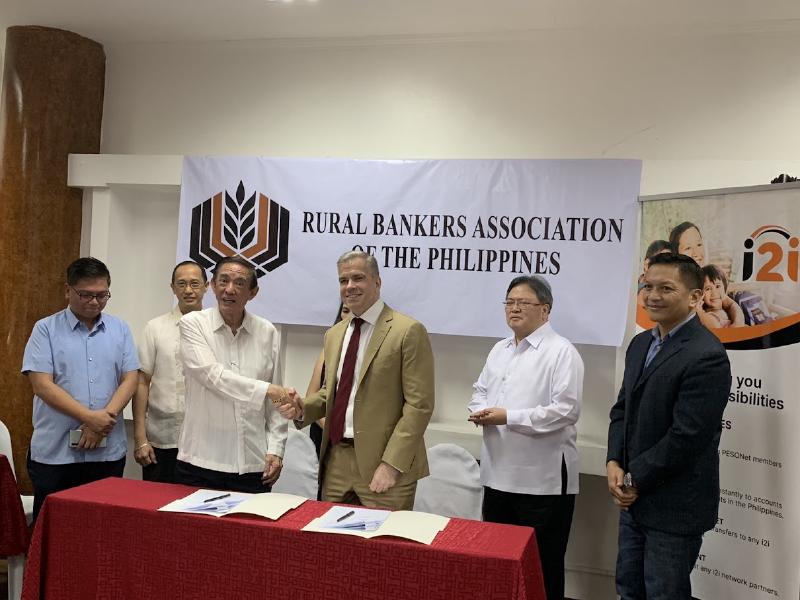
Innovation in emerging markets requires a “whole of government” approach. We didn’t bypass the regulator; we partnered with them. Operating under a Bangko Sentral ng Pilipinas (BSP) regulatory sandbox, we built features directly into the smart contracts to satisfy regulatory requirements (e.g. AML/KYC).
This approach proved that you could be “bleeding edge” without being “reckless.” We created the blueprint for how digital assets can coexist with—and significantly enhance—sovereign monetary systems.
The Legacy: From 2019 to Today#
The “experiment” of 2019 has stood the test of time. in 2025, that vision had evolved into PHPX, a multi-issuer stablecoin project operating on public ledgers like Hedera. The single-bank pilot of 2019 was poised to become the industry-wide standard of 2026.
The lesson for today’s leaders is clear: The “stablecoin revolution” isn’t a future event. For those of us who were in the trenches in 2019, it’s a proven reality. If you want to scale in Southeast Asia, you don’t wait for the theory to be perfect. You build the bridge.