
The software investor used to have a simple prejudice: capital intensity was a disease.
Factories were slow. Permits were painful. Hardware margins were messy. Utilities moved on regulatory time. Nuclear was a career risk. Batteries were a commodity trap.
Then Base Power raised $1 billion to put distributed storage into homes, and Valar Atomics raised $1 billion to scale nuclear reactors. Not valued at $1 billion. Raised.
That is not a footnote. It is a market signal.
Why did capital-intensive businesses become investable again?#
The old argument against atoms was not wrong. It was incomplete.
Capital-intensive companies fail when they combine high upfront cost with uncertain demand, slow regulatory paths, and no repeatable deployment model. That was the scar tissue from Cleantech 1.0. Investors were not irrational to prefer SaaS: low marginal cost, high gross margins, recurring revenue, faster iteration.
The difference now is that the demand signal is no longer theoretical.
The International Energy Agency projects that global data centre electricity demand will more than double by 2030 to roughly 945 TWh, with AI-optimised data centres growing even faster. In the United States, the IEA expects data centres to account for almost half of electricity demand growth through 2030.
The U.S. Energy Information Administration tells the same story from the grid side. After more than a decade of flat demand, U.S. electricity load started growing again after 2020. EIA forecasts the fastest growth in ERCOT and PJM, with data centers driving near-term load growth and Texas facing the sharpest pressure.
That changes the capital-allocation math.
When demand is vague, capex looks reckless. When demand is visible, contractual, and constrained by physical capacity, capex can become the moat. The investor question shifts from “can this scale like software?” to “can this company deploy physical capacity faster, cheaper, and with better regulatory leverage than the incumbents?”
That is a different game.
It is also why Investing in Atoms was early but directionally right: AI did not just make software cheaper to build. It made power, manufacturing, and deployment capacity strategically scarce again.
Why was Base Power able to raise so much money?#
Base is not just selling a battery. It is bundling hardware, power retailing, grid services, financing, installation, and software into one operating model.
That matters because a standalone home battery is usually an expensive consumer purchase. Base turns it into a distributed grid asset. The homeowner gets backup power and a lower-cost energy service. The grid gets flexible storage that can be aggregated and dispatched. The company gets more than one revenue vector.
Base said its $1 billion Series C would accelerate nationwide availability, expand domestic manufacturing, and support its network of distributed storage technology. It also said it had deployed more than 100 MWh of residential battery capacity in less than two years and qualified for Texas’s Aggregated Distributed Energy Resource program, which allows distributed batteries to be combined and bid into the grid.
That is the investable shape:
- A large, painful market: unreliable and increasingly expensive power.
- A near-term customer wedge: whole-home backup without requiring solar.
- A grid-scale thesis: distributed batteries as virtual power plant capacity.
- A manufacturing thesis: domestic storage and power electronics capacity.
- A policy tailwind: Texas market design that can value distributed flexibility.
The point is not that Base is risk-free. It has execution risk everywhere: customer acquisition, installation operations, hardware reliability, utility rules, working capital, and manufacturing scale.
But this is not a science project. It is a capex-heavy business with an operating wedge and a regulatory market structure that can pay for capacity. That is why capital shows up.
There is a useful parallel with Flatpeak. Flatpeak is attacking the digital coordination layer of distributed energy. Base is attacking the physical deployment layer. Both are responses to the same structural fact: the grid needs more flexible assets, and the legacy utility stack cannot move fast enough by itself.
Why was Valar Atomics able to raise so much money?#
Valar is a more extreme version of the same point.
Nuclear used to be where investor decks went to die. Long timelines, licensing risk, public opposition, complex fuel supply, and brutal project finance made the category hostile to venture capital.
Valar’s recent momentum gives investors a different underwriting frame. The U.S. Department of Energy selected Valar for its Reactor Pilot Program, a pathway designed to expedite advanced reactor demonstration and target criticality for at least three concepts outside national laboratories by July 4, 2026.
On June 18, 2026, DOE said Valar’s Ward 250 completed a zero-power fueled criticality demonstration at the Utah San Rafael Energy Lab. DOE described it as the first DOE-authorized reactor built outside a national laboratory.
That milestone does not equal commercial deployment. Cold criticality is not a bankable fleet.
But for investors, it reduces one kind of uncertainty: the company moved from concept to a regulated physical demonstration. In nuclear, that matters. It gives the capital raise a clearer use of proceeds: move from demonstration toward manufacturing and deployment of integrated systems, not simply fund another simulation deck.
This is why Valar can attract large capital despite the obvious risk. AI data centers, industrial heat, and energy security have created buyers who can think in gigawatts. Policy is trying to compress demonstration timelines. The startup has a milestone that can be verified outside its own marketing.
Again, capex is not the enemy. Unvalidated capex is.
Why are some AI bets getting hit while atoms get funded?#
The market is beginning to separate three things that were lazily bundled together in 2023 and 2024:
- AI infrastructure with visible demand.
- AI applications with measurable customer ROI.
- AI narratives with expensive compute and weak margin clarity.
The third bucket is under pressure.
Gartner still forecasts worldwide IT spending to grow 10.8% in 2026, with data center systems up 31.7% and software spending up 14.7%. That does not look like a technology depression. It looks like budget rotation.
The hard question is where AI spending creates defensible cash flow.
If a company sells generic AI wrappers, the market is right to be skeptical. The product can be copied, the inference cost can eat margin, and the customer may not see enough value to justify premium pricing. If a company owns the infrastructure layer, the system of record, the workflow, the compliance burden, or the distribution channel, AI becomes an accelerant rather than a standalone story.
Deloitte’s 2026 software outlook lands on the same tension: enterprise software still grows, generates strong cash flows, and benefits from large installed bases, but AI costs, new pricing models, and AI-native entrants will pressure margins and force software companies to prove value.
That is the twist.
Atoms are not back because software died. Atoms are back because software, especially AI software, now depends on scarce physical inputs. At the same time, durable enterprise software still has advantages that most AI-native tools do not: distribution, trust, workflow depth, compliance, procurement credibility, and embedded data.
The market is not choosing atoms over software. It is choosing real constraints over easy stories.
Why might enterprise SaaS survive and thrive yet?#
The easy answer is that enterprises move slowly. That is true, but not enough.
Enterprise SaaS survives when it owns a workflow the customer cannot casually replace. Payroll, ERP, security, identity, CRM, compliance, financial close, data governance: these are not weekend projects. A prototype can look impressive and still fail procurement, audit, integration, privacy, and operational uptime.
That is why the public SaaS rebound is important but not broad. Meritech reported that the market-cap-weighted SaaS index rebounded 38% off its April 2026 low in just 34 trading days, but roughly 80% of the regained market cap came from only 10 companies, including AI and security winners. The median software company still traded at 3.3x next-twelve-month revenue, far below the leaders.
So yes, enterprise SaaS can survive. Some will thrive. But not because “software always wins.”
It will thrive where it can pass four tests:
- Workflow depth: the product is embedded in business process, not floating at the edge.
- Data advantage: usage improves the system in ways a new entrant cannot quickly copy.
- Distribution trust: the buyer believes the vendor can handle security, compliance, and uptime.
- AI economics: the vendor can price AI in a way that protects margin and proves customer ROI.
This connects directly to Moats in the Era of Vibe Coding. When code becomes cheap, the moat moves to the system around the code: proprietary data, integrations, brand trust, distribution, regulatory expertise, and process power.
That is the part many AI bulls and SaaS bears both miss.
What should executives and investors do with this signal?#
Do not swing from one lazy consensus to another.
The wrong lesson is “all hardware is good now.” That will lose money. The other wrong lesson is “software is dead.” That will miss durable compounding businesses.
Use a stricter screen.
For capital-intensive businesses, ask:
- Is demand visible enough to justify upfront capacity?
- Is there a regulatory or commercial pathway that compresses time to deployment?
- Does each deployment make the next one cheaper or easier?
- Can the company finance assets without permanently diluting the operating company?
- Does software improve the unit economics, or is it just investor packaging?
For software businesses, ask:
- Is AI creating customer ROI or only product demos?
- Does the vendor own the workflow, data, and trust layer?
- Can the company absorb inference cost without destroying margin?
- Is pricing moving toward outcomes, usage, or risk reduction?
- Would the customer still renew if a cheaper AI-native clone appeared tomorrow?
This is also where corporate venture teams need discipline. The Build vs. Buy of Innovation matters more when the category crosses hardware, software, and regulation. A CVC cheque can buy market visibility. A venture builder may be needed when the parent has a unique asset, customer channel, license, or balance sheet that can reduce deployment risk.
The next decade will not look like the last SaaS decade. It will reward hybrids: power companies with software operating systems, software companies with physical-world integration, nuclear companies with manufacturing discipline, and AI companies that understand electricity as a strategic input.
Atoms are investable again.
But the real winner is not atoms or software. It is the company that owns the constraint.
Frequently Asked Questions
? Why are investors funding capital-intensive energy startups again?
? Does the return of atoms mean enterprise software is dead?
? What should investors look for in AI-era infrastructure companies?
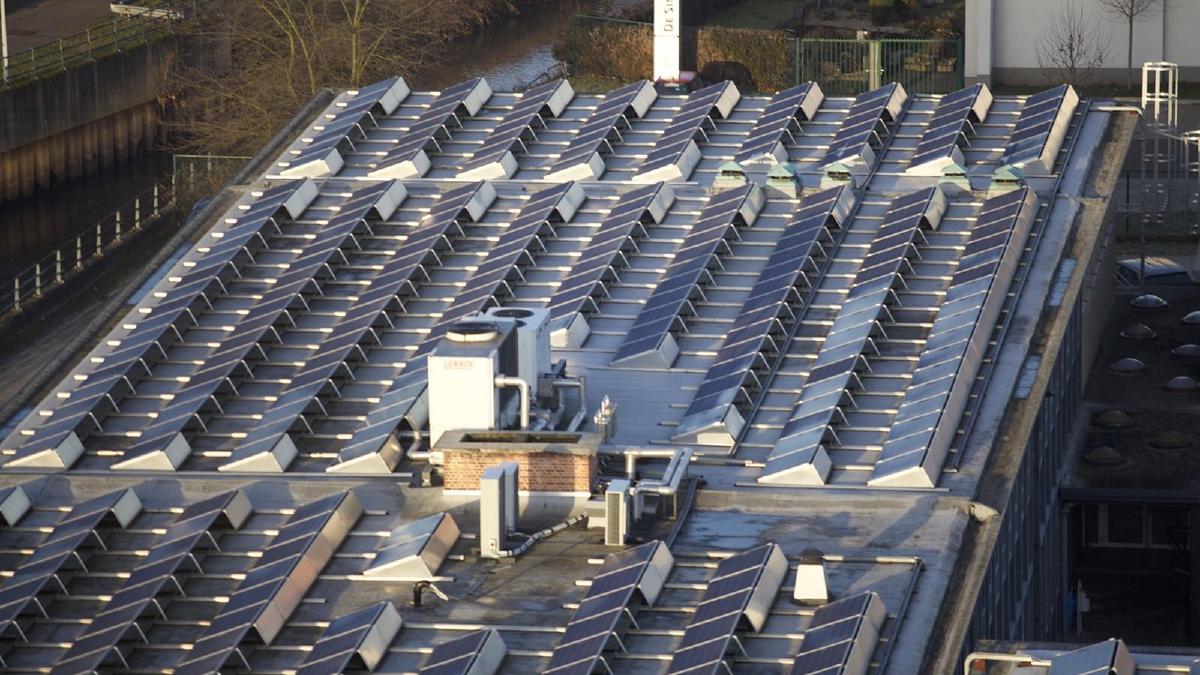
Featured image by Bert Braet from Pixabay.