
This article originally appeared on LinkedIn on 2025-09-24.
Are banks, and maybe the world, becoming indistinguishable in the age of AI?#
I recently moderated a panel on AI in banking which I titled “Banking on AI” (get it?!?). I opened the panel by outlining some major themes, and ended on the following provocation: in the age of AI, are we differentiating or just slowly gradient descending into sameness?
I shared the following visual from Digital Banking advisor David Jimenez Maireles:
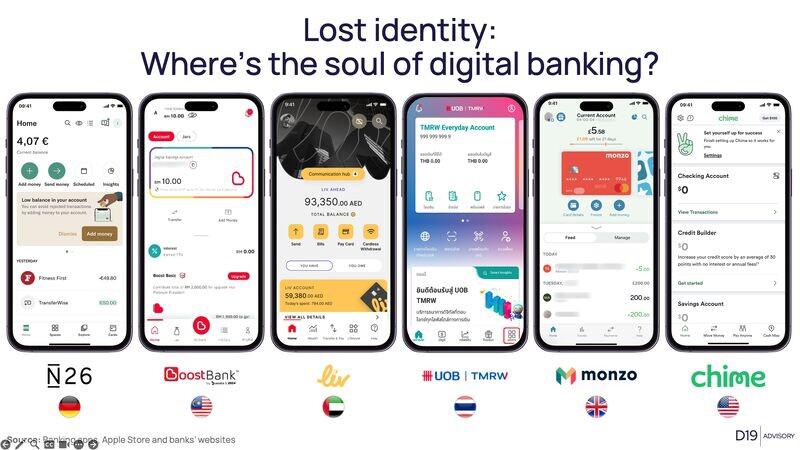
In fintech, we’ve long said that design is destiny. Yet if you compare most digital banking apps around the world, they increasingly look and feel the same. Clean minimalism, pastel gradients, the same UX flows. As David recently noted, differentiation in banking apps is collapsing.
This is amplified in the age of AI across the entire bank and industry: if every bank trains on the same data with the same models, do we risk losing the very essence of competitive advantage in our industry?
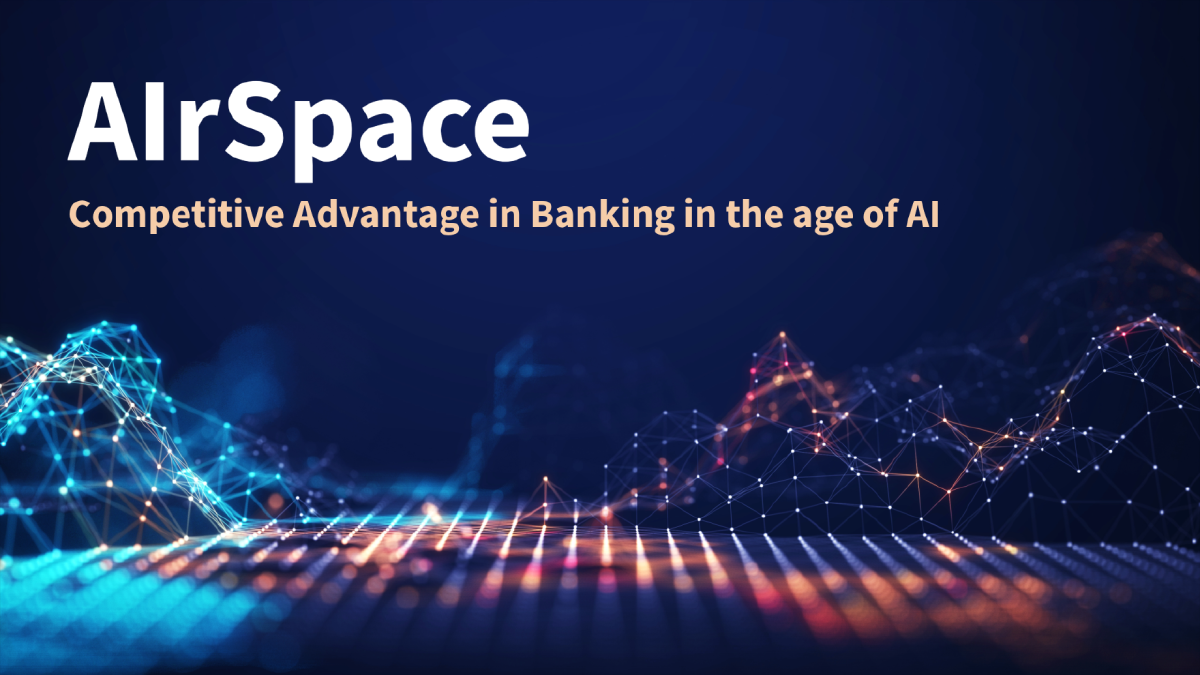
AirSpace#
This descent into sameness is not new. Back in 2016, Kyle Chayka’s essay AirSpace (published in The Verge) argued that technology was already driving global sameness. Airbnb apartments, coffee shops, co-working spaces, even menus: wherever you traveled, you saw the same white walls, Edison bulbs, succulents, and avocado toast. The internet was flattening culture into a shared aesthetic.
“If taste is globalized, then the logical endpoint is a world in which aesthetic diversity decreases.”
Now, AI accelerates this trend. If every bank, and every company, feeds the same models the same data, the outputs will converge. Not just in banking, but in advertising copy, product design, branding, and beyond. What began as AirSpace in lifestyle now threatens to become AIrSpace across industries.
Banking (Same Same or Different?)#
For financial services, this raises an uncomfortable question: if all apps, interfaces, and even customer interactions start to feel the same, where is competitive advantage? Or is it that “homogeneity is a product that users are coming to demand” as posited in the original AirSpace essay?
Peter Thiel, entrepreneur, venture capitalist, and author best known as a co-founder of PayPal argues that striving to out-compete in existing markets (i.e. “me-too-ness”) limits value creation. By contrast, the rare companies that carve out new ground (“monopolies” in his sense) succeed by virtue of being unique:
“Competition is for losers…All happy companies are different, and all unhappy companies are alike.”
The answer to differentiation may not lie in the tools themselves, since everyone has access, but in how bravely and boldly we break from their defaults. Differentiation will come from vision, brand, and execution, not model or tool choice.
In banking and fintech especially, this provocation matters: will AI push us into a future of undifferentiated sameness, or will it challenge leaders to rediscover what truly sets them apart?
What do you think? If you are looking to differentiate your venture in the age of AI, reach out.
Let's Build What's Next